Showing posts with label historical fiction. Show all posts

Saturday, 4 July 2020

Lancelot by Giles Kristian BOOK REVIEW

Giles Kristian is a new name to me - I knew little about the author when I picked up Lancelot and a quick Google quest told me that he had written several well received action/adventure novels that centered on the Vikings, as well as a brace of books set around the English civil war. He also co-wrote a book with Wilbur Smith.

I purchased Lancelot because I've always been something of a sucker for all things Arthurian, and I have, over the years, read many books that used the legends as a starting point but what I found in this book was a totally original retelling of the famed sagas, that uses the love triangle between Arthur, Lancelot and Guinevere in a totally audacious way that allows the author to present several remarkable twists and turns that literally, I kid you not, had me open mouthed. I soaked deep, allowing the fiction to submerge me,  into the world of a story well told.

There is something of a lyrical poetry to the author's style, but at the same time the story is straight forward and propels the reader along in the way all the best fiction does. It's a big book, topping six hundred pages, but not once during the narrative did the engine stall. I'd recommend this book highly to anyone who fancies escaping into a well realised world and spending time with wonderfully drawn characters.

The story is told in the first person with Lancelot himself the narrator, and through this device the post Roman landscape is brought vividly to life. We follow the young man through his childhood, and into adulthood where he meets and is bound to King Arthur, the high king of the Britons. It is a story of war, of betrayal, of jealously but mostly it is the story of love.

Bloody marvelous, it is.


v


Wednesday, 6 February 2019

Book Review: King Arthur - Dragon Child by M K Hume


 "Perhaps my love for the legends was because my husband shares a name with the venerable hero. Perhaps, I was just so upset because the story had become so bastardised over the years that I decided to put my own mark on it. And perhaps I wanted to honour human courage rather than magic. Whatever the reason, I am certain that there are so many stories in the great sweep of history that are so vivid, compelling and riveting that I will never lack for subject matter." M K Hume, talking of the Arthurian legends.

I came across this book by happy accident - it was mistakenly placed among a pile of old western paperbacks that I picked up from a musty old secondhand book shop - as well all know musty old shops are the best kind of secondhand book shops. I started reading the book and before I knew it I was fifty or so pages in and hooked - the book tell of Arthur's (Artor as he's called in the book) early life and of his rise to the position of King of the Britons. The Arthur legends are of course just that - legends and no-one knows if he really existed at all.He first  appeared in print in the writings of Welsh historian, Nennius who gave a list of 12 battled in which the fabled king fought. In the 12th century, Geoffrey of Monmouth wrote the first life story of Arthur and it is here that Caliburn, the magical sword commonly called Excalibur first appears. So did Arthur exist? Who knows but someone certainly kept the invading Saxons at bay for a great many years. In fact all that can be said with even  the least degree of certainty is that sometime in the fifth and sixth centuries, someone called Arthur or Arturus led a band of warriors who fought a resistance against the invading Saxons,Jutes and others from the north of Europe.


M K Hume

M. K. Hume's epic tale uses the voice of historical fiction rather than fantasy, and the Celtic world is vividly brought to believable life - magic doesn't play a part in this story and indeed the wizard, Merlin is here a master strategist, which makes the book all the more believable and fits in with the convincing historical context. As does the author's take on the sword in the stone legend, and immediately upon finishing this book I  took a trip up the Amazon and downloaded, Warrior of the West, which is the second book in the Arthur trilogy. I'm currently reading that book on my all new Kindle Paperwhite (expect a review of the newest Paperwhite soon) and this book is even better than the first so there'll be a review of the second part, and no doubt the third, appearing on these tainted pages very soon.


Quite excellent storytelling.


Was King Arthur a real person? Find an interesting article by John Mathews HERE


Friday, 11 June 2010

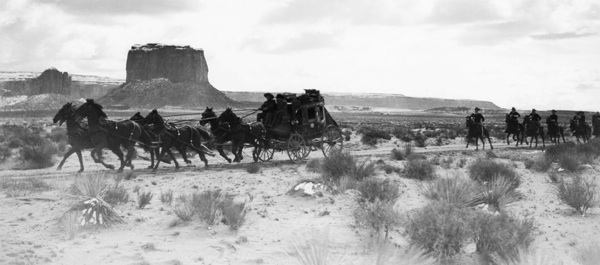
The Wild West weren't like that

I've been taking part in an interesting debate on historical accuracy in westerns and does it matter, on the Black Horse Western Forum - anyone wanting interesting debate should join Here. Anyone can join but you'll need a free Yahoo account.

It's led me to wonder how important is it to be historically accurate?

In my own westerns I am mindful of getting the location, guns, clothing etc spot on but the wild west of my books owes more to the west of John Wayne and Clint Eastwood than the true historical west. In my west Billy the Kid lived to be an old man, Arkansas Smith was the quickest draw there ever was and Gary Dobbs is a wandering hack who pens popular dime novels full of lies. The books are written to entertain and I'm very conscious of creating a universe that is fantasy but at the same time feels real enough to convince.

In Sergio Leone's epic Once Upon a Time in the West - When Harmonica climbs down the ladder, only to meet Frank at the other end of a '45, we see that the ladder is electro-welded to the wagon and the steps are also electro-welded to the legs of the ladder - rather lousy welding seams, too! The movie takes place around 1870. Electro-welding started during the '90s, but the method got practicable only in the 1920s – and began to be commonly used in the late '30s when the great navies (except for the Royal Navy) started to use the method for their first-line ships. The great leap forward came during WW2, when Liberty ships and many other vessels were electro-welded.

In High Noon - After Gary Cooper writes his last will and testament, he puts it into an envelope and licks it shut. Those kind of envelopes were invented about thirty years after the film takes place.

In Tombstone - In the scene just before the fight at the O.K. Corral, Wyatt is talking to his brothers and Doc on the porch of the sheriff's office. There is an American flag flying behind him with 50 stars on it when in fact there were only 38 stars on the flag in 1881.

A level of accuracy is, I suppose essential - for instance using a gun that wasn't invented until 1900 in an 1880 set western would be a no no. Maybe most readers wouldn't notice but there would always be someone who would know their guns and for them that would ruin the story. But no matter how well you research errors can crop up - for instance in the first draft of Arkansas Smith I had a character mention powdered milk many years before it had been invented. Thankfully the editor picked up on that and I was able to change the piece. Now I would never have known that and I feel I have a wealth of knowledge on the old west, as any writer of westerns must have. So it wouldn't have ruined the story for me were I reading it but someone would have noticed. The result that person would have been dragged out of the story by the error and would have a problem suspending disbelief further.

In The Shootist - The opening montage depicting Books's past exploits mentions a Colt .45 and shows a single action Colt revolver being fired. The date indicated on the screen is 1871. This revolver was not manufactured until 1873.

In The Alamo - The movie's opening scene manages to get wrong almost every historical detail except the names. Sam Houston was never in San Antonio with Colonels Neill, Travis, and Bowie. Then-governor Henry Smith - not General Houston - made Travis a colonel (in December). Bowie did a lot of drinking and carousing, but that never caused him to be demoted or to lose a command. Bowie did marry into the Mexican aristocracy, and he acquired a lot of land, but it would have been ridiculous for Travis to therefore doubt his loyalty to the rebellion. Bowie was one of the rebellion's best-known firebrands and had just taken San Antonio from the Mexicans.

So in the final analysis how important is historical accuracy in a western?

Pretty darn important, I guess.

Let's be careful out there......

  The recipient of 26 Emmy awards, actually nominated 29 times and between 1981 and 1984 it had four consecutive wins of Best TV Series. It...