Showing posts with label countdown to django unchained. Show all posts

Friday, 14 December 2012

Countdown to Django Unchained - Eurowesterns: The orginal Django

When Sergio Corbucci cast Franco Nero as the wandering Django he gave us an iconic spaghetti western that is every bit as important to the genre as Sergio Leone's Dollar trilogy. And like Leone Corbucci had spent more than a decade working in Italian cinema before moving into westerns. Previously to this he had directed a string of popular comedies for his home market.

Corbucci had worked with Leone when he was his assistant on 1959's The Last Days of Pompeii, but the first western he directed was Red Pastures (1963) which starred James Mitchum (son of Robert) and featured a story of warring gangs - a plot Leone would use for his own later A Fistful of Dollars. He would direct another two western before creating his masterpiece with Django and these were Minnesota Clay and Johnny Oro and both of them are easily forgotten.

Django (1966) though stands up there with the best of the genre - The Italian westerns were known for the quirky qualities of their anti-heroes, and Django is possibly the quirkiest of them all. He doesn't travel around on horseback but rather walks everywhere dragging a battered coffin, the contents of which are a mystery for much of the movie. The screenplay was written by Corbucci and his younger brother, Bruno with input from Franco Rossetti. Jose Maesso and Piero Vivarelli. The story find the coffin-dragging drifter Django returning from the civil war and finding himself caught between two warring factions in a border ghost town. Hey originality was not something that bothered the european western masters and the plot of Django not only borrows from Corbucci's own Red Pastures but Leone's A Fistful of Dollars as well as several other movies. All of these movies were made with the same ingredients but they came out of the creative pot with widely different flavors, though all provided the same feast of violent mayhem.


Django feels like no other western - with the ever present coffin it shares a similar atmosphere to the Italian horror movies. The moody lighting, lurid colour schemes and the Klansmen all add to the mood. And of course the semi ghost town in which the movie takes place is reminiscent of a graveyard. Most sphagetti westerns gave us a sun bleached, dry landscape but Django takes place in a rain soaked, mud bath of a town.

The casting of the lead was spot on  - Franco Nero had the smoldering looks and when he moved it was with a slow, measured quality that was in perfect synch with the mood of the movie. That the actor could perform his own fight scenes was a bonus and the fights in this movie are brutally realistic, in a stylized way of course.

Django, like most of the characters from the sphagetti westerns, is a loner with a mysterious past - much of which is never explained which keeps the character totally enigmatic. He is a dark antihero and with his plan to steal gold he manipulates two warring factions to his own ends. This movie is savagely violent (the ear cutting scene in Quentin Tarantino's Reservoir Dogs came from this movie) but never off-putting. It can be stomach churning at times but that's the measure of how involved the viewer gets in this amazing movie.

When the movie was released it was a phenomenon in Italy and turned Franco Nero into a major star. The film was also huge in Spain and Germany, but the film was not released in the UK because of the extreme violence and perhaps because of the atrocious dubbing it didn't do too well in the US market. Still the movie begat a slew of official and unofficial sequels and to date there have been over fifty Django movies, most of them are dire and in the book, Once Upon A Time in the Italian West author, Howard Hughes states that out of all the Django movies only four are worth viewing.


Django and Django
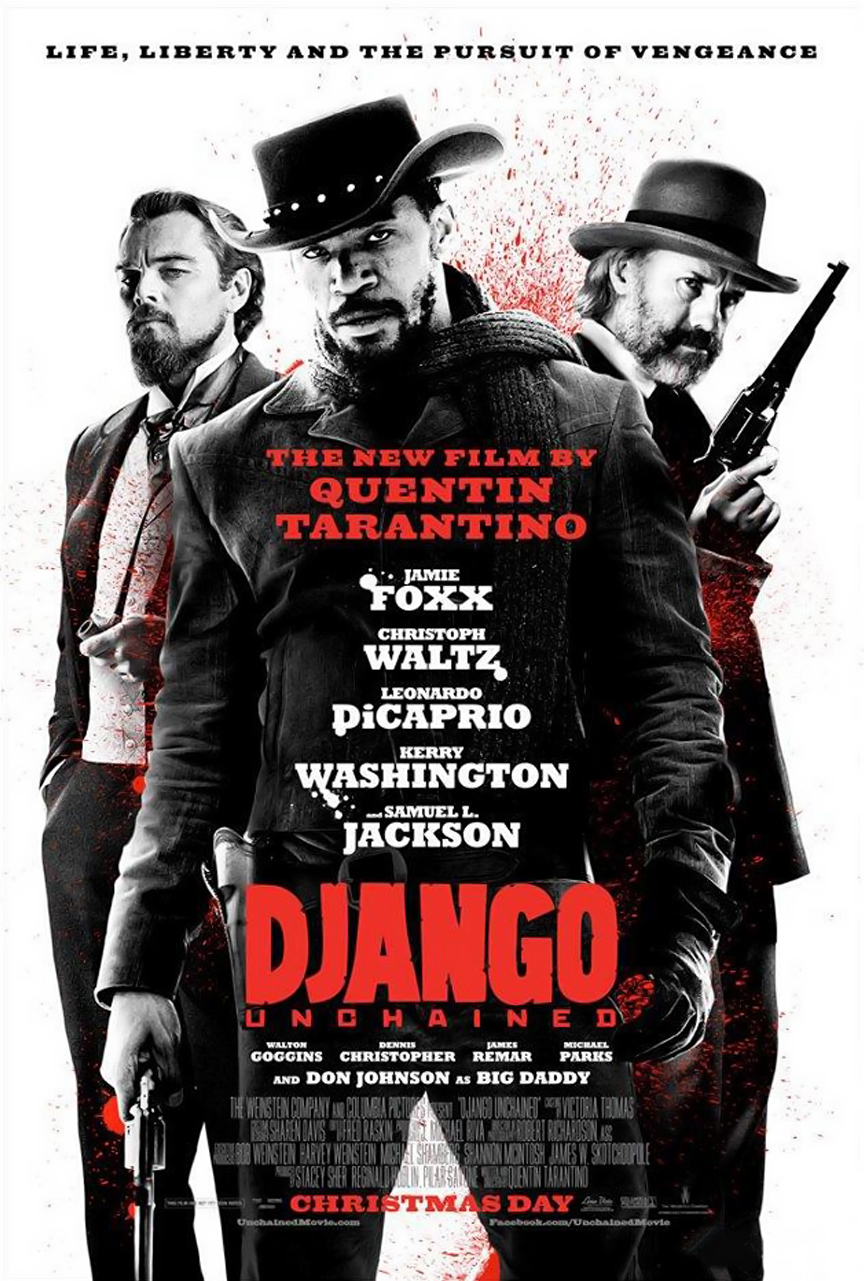
Django remains an exciting and controversial film that over the years has become to be regarded as a classic with a huge cult following. Director and film geek, Quentin Tarantino is such a fan that he has added to the Django myth with his forthcoming Django Unchained, even giving original Django, Franco Nero a part in the movie.


If you've never seen Django then you need to do so immediately, for it is an exceptionally good film and an important piece of western movie history.

Thursday, 13 December 2012

Countdown to Django Unchained: Django the comic

  • R.M. Guéra will be handling the interior art for the entire series. Guéra is most known for his art in the comic book series Scalped.
  • Jim Lee drew the cover of the first issue.
  • Issue #1 will be released on December 19th.
  • Issue #2 will be released on January 2nd.
  • There will be five issues total. The issues will be based on the original screenplay and will include scenes that did not make it into the final cut.
  • Each issue will retail for $4.99 USD.
Amazon will be stocking the comic for worldwide sales.

A collected graphic novel is expected to follow.


Countdown to Django Unchained: Early reviews

The first reviews of the movie have been uniformly positive with the film currently sporting a 100% rating on Rotten Tomatoes.

Move over the Avengers, piss of Dark Knight and vamoose you Hobbit critters, there is only one film that matters this year and that is - Tarantino's Django Unchained.

"Quentin Tarantino's brilliant and brutal revenge western is a wildly exciting return to form: a thrilling adventure in genre and style climaxing in a bizarre and nightmarish scenario in a slave plantation in 1858. The movie is managed with Tarantino's superb provocation and audacity, with a whiplash of cruelty and swagger of scorn. It is superbly acted by Christoph Waltz, Jamie Foxx, Kerry Washington, Leonardo DiCaprio and, particularly, Samuel L Jackson, who creates a masterpiece with his chilling character Stephen, the grey, stooping servant-elder to DiCaprio's unspeakable slave-owner Calvin Candie." The Guardian

"Tarantino's most distrubing movie." Mike Ryan, Huffington Post

"Applying the episodic format and visual template of classic and spaghetti Westerns to a revenge saga mostly set in the Deep South just before the Civil War, the film makes a point of pushing the savagery of slavery to the forefront but does so in a way that rather amazingly dovetails with the heightened historical, stylistic and comic sensibilities at play. The anecdotal, odyssey-like structure of this long, talky saga could be considered indulgent, but Tarantino injects the weighty material with so many jocular, startling and unexpected touches that it’s constantly stimulating. A stellar cast and strong action and comedy elements will attract a good-sized audience internationally, though distaste for the subject matter and the irreverent take on a tragic subject might make some prospective viewers hesitate." Hollywood Reporter


Wednesday, 12 December 2012

Countdown to Django Unchained :Eurowesterns - Savage Guns AKA Tierra Brutal

Here at the Archive the excitement for Tarantino's Django Unchained is at fever pitch, and so I present this short series that will look at the European western boom that gave us, among others, the original Django movie. Tarantino makes no secret of his love for the spaghetti westerns and it is a safe bet that his Django Unchained will feature the operatic camera shots, the savage violence and grim humour that made the sub-genre so memorable.

"Quentin Tarantino's brilliant and brutal revenge western is a wildly exciting return to form: a thrilling adventure in genre and style climaxing in a bizarre and nightmarish scenario in a slave plantation in 1858" Early review from The Guardian Newspaper


And so we head West of Bognor Regis and start the series with the movie that is a strong contender for the title of the very first sphagetti western.


Savage Guns (1961)

Directed by Michael Carreras and written by Jimmy Sangster, you could call this a Hammer Western since both men will forever be associated with the iconic British film studio. In fact the film was very nearly a full blown Hammer production but the company relented at the last moment, saying they did not want to add westerns to their list of genres and so Carreras  founded an independent film company, Capricorn Productions, with the help of writer/director Jimmy Sangster . In Spain Carreras and Sangster found José Gutierrez Maesso ready to co-produce the movie, and they also secured money from MGM in exchange for North American rights.

Whilst not one of the best Euro Westerns (spaghetti westerns) it is an important one in the development of the genre. For one thing it was the first western filmed in the Spanish  Alemera Desert region, an area used effectively later by Sergio Leone and just about any European team wanting to create the American West. Thus Michael Carreras, the main motivator behind the movie can seriously be given the status of the man who invented the spaghetti western.  Though perhaps Paella western would be more appropriate since there is little Italian involvement.

Savage Guns then is the first of the spaghetti westerns.

The film is very much a traditional western in storytelling but it is much more violent than the American westerns of the time, and the conventions of the western were turned on their head by the fact that in this movie the good guys wore black hats, while the baddies wore the white. Why this stylistic element was introduced I'm not really sure, but it does sum up the fact that the Europeans were going to approach the genre from a different angle than the standard Hollywood fare.

American actors were cast in the lead roles which became a tradition with many of the European oaters, most notably Clint Eastwood's casting in the Leone trilogy. And the supporting cast were largely filled with Spanish actors alongside many Hammer contract players.

The scene where lead, Richard Basehart has his hands crushed by a wagon wheel is incredibly graphic and set a trend that many of the European westerns would follow. The film also toys with the idea of the anti-hero with the lead actually shooting enemies in the back and also starting gunfights by drawing first, effectively cheating.

Parts of the movie are insane - one scene where we see the baddies mown down with a Gatling gun is unintentionally hilarious - one bad guy takes about five hundred bullets to eventually die, and another throws his arms up, yells "Ahhhh" and then falls forward into a lifeless heap. It is also odd that given the extent of the violence there is actually very little blood seen on screen.

All in all, Savage Guns is a much overlooked spoke in the wheel that would turn and form the spaghetti western genre proper. And although the film wasn't a success with the North American market it was successful enough in Europe to influence the more notable genre luminaries who followed. And for that reason alone it is essential viewing for anyone interested in the European westerns.

Where to see it?


The film is available on DVD both as a standalone disc and bundled with three other westerns in the budget priced Brentwood Home Video box set, The Outlaws. It is a pity we don't get a remastered print but rather a video tape transfer, but beggers can't be chosers and this edition is one of the few English language versions of the film available.

Let's be careful out there......

  The recipient of 26 Emmy awards, actually nominated 29 times and between 1981 and 1984 it had four consecutive wins of Best TV Series. It...