
Showing posts with label gilfach goch. Show all posts
Showing posts with label gilfach goch. Show all posts
Monday, 5 September 2016


Friday, 12 October 2012
(A) Bill comes through the post

The cover image looks stunning on the glossy boards used for the binding. Robert Hale use stock images for their western novels, which can often result in the cover image having little to do with the actual novel, but for this book this is not the case and the scene on the cover comes from within the book - right down to the colour of shirt old Wild Bill wears, and the time of day even. The scene within the book that so closely resembles the cover image occurs at sunset - and look at those saturated colours in the cover image! I'm one happy chappy and grateful for the work my publisher's have done in ensuring the book comes to market as the best possible product.
Anyway I do hope many of you will go get the book, even those who have never tried a western - it is first and foremost a western, a genre I love above all others, but at the heart of the story is a character study of an often hilarious but always deadly Welshman. I had a great deal of fun writing this fish out of water story, and found that the Welsh humour didn't have to be forced into the western setting, but was perfectly at home on the wild frontier.

‘Die, me?’ for a
moment Bill seemed to be considering the question but then he smiled. ‘I don’t
think I’m quite ready to die yet. There’s still so many drinks I have not drunk
and pleasant thoughts I have not thunk. The world is a wondrous place, full of
possibilities so no, I do not wish to die.’
The book this time around is dedicated to the memory of my late mother, for it was she who taught me to read in the first place and opened up a wonderful world of adventure and romance. And I hope I've captured a certain spirit of adventure, of optimism in Wild Bill Williams.
The initial idea for Wild Bill Williams came from a book review by fellow Black Horse author, Nik Morton. The book in question was Welsh Cowboys and Outlaws by Dafydd Meirion and published by Ylofa Books. Now being Welsh and a western nerd, not to mention a writer of breezy little westerns, I had to get the book. I'd just completed work on The Ballad of Delta Rose and had no clear idea what my next western would be, but as soon as I read the Welsh Cowboys book I knew that the main character would be, like myself, a Welshman and also, like myself, he would hail from the small village of Gilfach Goch - a fitting birthplace for a Welsh cowboy since the name translates to Red Valley.

As soon as I had that idea the story came to me quickly - especially the character of William Williams AKA Wild Bill Williams. I found old Bill to be a quirky sort of fellow, and as I started writing of his visit to the town of Stanton he revealed much about himself to me - for instance Bill loves to knit (claims it improves his trigger finger) and carries several balls of wool and knitting needles in his saddlebags, he dislikes and distrusts authority and understands that quite often law and justice are not quite the same thing.
The fastest stitch in the West.
I figured that the likes of Dodge City and Tombstone wouldn't offer too much of a shock for a man used to the Rhondda Valleys of a Saturday night. The point was how would the Americans find the Welsh cowboy with a bell in every tooth, a penchant for knitting and a deadly fast draw?
There was nary a frown when Wild Bill Williams was in town. He had a way about his manner that enabled most folks to forget all their troubles and become positively festive. It was said that Bill could start off a dance at a funeral and carve a grin out of the most granite of faces.
I'd always thought of Wild Bill as a standalone novel, and it is,but lately I've been thinking that Wild Bill could return again one day, because a character with a heart as big as his perhaps deserves a few more wild stories spun about him. Ahh well, that's another story and one I may tell one day but for now go get your hands on a copy of Wild Bill Williams.
Visit Wild Bill's Facebook page and give him a big old Like - HERE
Tuesday, 26 June 2012
Miss Marple on Steroids
The promotion for my novella, Granny Smith Investigates has been a great success with the eBook being downloaded over a thousand times in its first twelve hours - the promo runs until midnight 28th June 2012 so if you haven't downloaded a free copy then do so HERE
The character of Granny Smith will be developed over a series of books and the novella, Granny Smith Investigates, was originally written to get a feel for the character and her world, but I was so pleased with the finished work that I decided to put it out there in eBook land.
Granny Smith seems so very real to me.
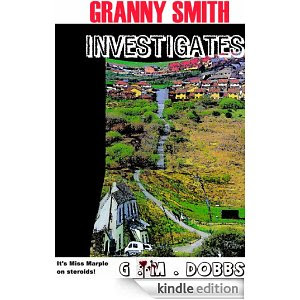 Below you'll find a section of my notes, which actually start the novella, on the origins of Granny Smith. The amateur sleuth who has been likened to Miss Marple on Steroids.
GET A COPY NOW
The character of Granny Smith will be developed over a series of books and the novella, Granny Smith Investigates, was originally written to get a feel for the character and her world, but I was so pleased with the finished work that I decided to put it out there in eBook land.
Granny Smith seems so very real to me.
GET A COPY NOW
On the origins of the Granny
Smith
Of course Granny Smith’s real name
wasn’t Granny but everyone called her Granny. It wasn’t because she was a
grandmother, though she was three times over, but rather because as a child she
had loved apples, would take one to school for her lunch each and every day. It
seemed that wherever she went an apple went with her and so associated with the
fruit had she become that eventually some bright spark had nicknamed her Granny
Smith after that popular Australian variety of apple.
Her given name
was Mary Alice Davies, which meant she had the rather unfortunate initials - M
A D, but she had never let that bother her and besides, she had often reasoned;
when I marry I will have a totally different surname. Eventually she had married a local man who went by the name of
Arthur Smith, Smith of course, like Davies, being a common enough name,
and she did indeed get a new surname, in fact her nickname became her surname.
However because most people knew her by the nickname, Granny Smith, no one
seemed to notice when she became a Smith for real, and, if truth be told, to
many people she would remain forever M A D.
Don't have a Kindle? You can still read this book!
If you don't have a Kindle you can still read this book by downloading the correct Kindle app for your device. Kindle is available on the following platforms: PC, Android, Blackberry or iPhone or iPad.
Saturday, 23 June 2012
Confessions of a Teenage Movie Fan

 |
| A typical Workinmen's Hall interior |
As incredible as it sounds I remember the local priest and his flock of bible bashers protesting outside the hall when the Exorcist was being shown, warning us that our soul would be dammed if we went in and saw the movie. I think that was the only film we were turned away from for being under-age. Absurd when we used to get into watch soft porn comedies like the Confessions and Adventures movies. In fact it wasn't until years later that I finally saw The Exorcist on video tape and what a load of tedious crap I thought it was.
 The
Workingmen's Hall closed sometime around the early 80's and then one
Sunday afternoon vandals broke in to steal the old copper piping for
scrap value and set a fire. The building was declared unsafe and
demolished soon after. I was there that Sunday afternoon, walking past,
when it happened and I remember watching the fire engulf the building
and thinking even then of all the hours I had spent within its walls as a
kid. In fact it was the Workingmen's Hall that gave me my life long
love of the movies.
The
Workingmen's Hall closed sometime around the early 80's and then one
Sunday afternoon vandals broke in to steal the old copper piping for
scrap value and set a fire. The building was declared unsafe and
demolished soon after. I was there that Sunday afternoon, walking past,
when it happened and I remember watching the fire engulf the building
and thinking even then of all the hours I had spent within its walls as a
kid. In fact it was the Workingmen's Hall that gave me my life long
love of the movies.It's gone forever now as have many of the other Workingmen's Halls in the valleys. They were called Workingmen's Halls or Miner's Institutes because they were built with donations taken weekly from the wages of local workingmen.
"Gilfach Goch (English: Red Valley) is a small former coal mining village. It is reputed to have once been home to the author Richard Llewellyn who based his novel How Green Was My Valley in a fictional town assumed to be based on Gilfach Goch. Llewellyn would spend long summer holidays with his grandfather in the village."
It's sad and it's only when something's gone that you realise the true worth of the place. It was more than a building and over the years it had served as a place for communities to meet. When I was a kid in the 1970's the Hall was already past its best but for many years it served as venue for local dances, amateur dramatics presentations, Bingo nights and of course as a movie house. It also doubled as a soup kitchen during many of the various miners strikes.

Whenever something monumental like that happened we would boast to our mates - "She let me have top!". I can't recall anyone ever saying they were allowed to have bottom too. That would have been too much - you'd crash your skateboard just thinking about it.
I guess we never thought that one day it would be gone, as a kid you don't really think like that. But everytime I walk past the place where it once stood, and look at the modern houses built there, I think of the many happy hours spent in the Workingmen's Hall, of all the movies I saw there and of course of the first time I ever had top.
Thursday, 13 January 2011
YESTERDAY IS DEAD AND GONE
 |
| The Workingmen's Hall Gilfach Goch |
|
| A typical Workinmen's Hall interior |
As incredible as it sounds I remember the local priest and his flock of bible bashers protesting outside the hall when the Exorcist was being shown, warning us that our soul would be dammed if we went in and saw the movie. I think that was the only film we were turned away from for being under-age. Absurd when we used to get into watch soft porn comedies like the Confessions and Adventures movies. In fact it wasn't until years later that I finally saw The Exorcist on video tape and what a load of tedious crap I thought it was.
The Workingmen's Hall closed sometime around the early 80's and then one Sunday afternoon vandals broke in to steal the old copper piping for scrap value and set a fire. The building was declared unsafe and demolished soon after. I was there that Sunday afternoon, walking past, when it happened and I remember watching the fire engulf the building and thinking even then of all the hours I had spent within its walls as a kid. In fact it was the Workingmen's Hall that gave me my life long love of the movies.It's gone forever now as have many of the other Workingmen's Halls in the valleys. They were called Workingmen's Halls or Miner's Institutes because they were built with donations taken weekly from the wages of local workingmen.
"Gilfach Goch (English: Red Valley) is a small former coal mining village. It is reputed to have once been home to the author Richard Llewellyn who based his novel How Green Was My Valley in a fictional town assumed to be based on Gilfach Goch. Llewellyn would spend long summer holidays with his grandfather in the village."
It's sad and it's only when something's gone that you realise the true worth of the place. It was more than a building and over the years it had served as a place for communities to meet. When I was a kid in the 1970's the Hall was already past its best but for many years it served as venue for local dances, amateur dramatics presentations, Bingo nights and of course as a movie house. It also doubled as a soup kitchen during many of the various miners strikes.
Whenever something monumental like that happened we would boast to our mates - "She let me have top!". I can't recall anyone ever saying they were allowed to have bottom too. That would have been too much - you'd crash your skateboard just thinking about it.
I guess we never thought that one day it would be gone, as a kid you don't really think like that. But everytime I walk past the place where it once stood, and look at the modern houses built there, I think of the many happy hours spent in the Workingmen's Hall, of all the movies I saw there and of course of the first time I ever had top.
Wednesday, 16 June 2010
HOW GREEN WAS MY VALLEY (BOOK REVIEW)
HOW GREEN WAS MY VALLEY
RICHARD LLEWELLYN
FIRST PUBLISHED 1939
MY EDITION: NEL 1981
CURRENTLY AVAILABLE AS PART OF THE PENGUIN MODERN CLASSIC SERIES
This is one of those books that I've always promised myself I would read and yet never gotten around to it - however, upon seeing an old battered paperback copy for the grand total of 10p at my local boot sale, I thought now was the time to do so.
The author Richard Llewellyn spent much of his early years in my home village of Gilfach Goch and the fictional Welsh village in this novel is very much based on Gilfach - the pub in this book is called The Three Bells, obviously based on the Six Bells which once stood in Gilfach before being knocked down in the mid 70's. (In fact I remember playing amongst the ruins of this once grand building.) And reading the book I was very much reminded of the Gilfach I grew up in - during my childhood in the 1970's the coal industry was in its last stages but the signs of the past were still there. The mountains were still black with coal tips and slag heaps and the river ran thick, looking like tar, with the black dust washed into it from further up the valleys.
"Courage came to me from the height of the mountain, and with it came the dignity of manhood, and knowledge of the Tree of Life, for now I was a branch, running with the vital blood, waiting in the darkness of the Garden ....to bring forth sons and daughters I saw behind me those who had gone, and before me, those who were to come. I looked back and saw my father, and his father, and all our fathers, and in front, to see my son, and his son, and the sons upon sons beyond."
The novel is a hymn to a way of life now gone, narrated by the character Huw Morgan we see the struggles, joys and tragedies of this close knit coal mining community. The language used is beautiful and the story never falls into the trap of being overly sentimental. It reads real - when turning the pages some little detail would trigger a memory within myself and the secondary characters, especially Dai Bando reminded me of the old folk I knew while growing up.
’’There is no fence or hedge around time that has gone. You can go back and have what you like if you remember it well enough.’’
It truly is a joyous book, one that I plan to read again very soon and, although my Welsh connection ties me to the narrator, I think that anyone will enjoy this wonderful story. It's a story of a struggle, of m en fighting against changing times and ultimately of family - now, that's universal.
If author Richard Llewellyn could see Gilfach now he would see that once more the valley is green, but a way of life has been lost forever. Though it can still be felt in the ground, in the buildings and in wonderful works of fiction such as this.
Left I have posted two pictures of Gilfach Goch as it was then and as it is now.
RICHARD LLEWELLYN
FIRST PUBLISHED 1939
MY EDITION: NEL 1981
CURRENTLY AVAILABLE AS PART OF THE PENGUIN MODERN
 CLASSIC SERIES
This is one of those books that I've always promised myself I would read and yet never gotten around to it - however, upon seeing an old battered paperback copy for the grand total of 10p at my local boot sale, I thought now was the time to do so.
The author Richard Llewellyn spent much of his early years in my home village of Gilfach Goch and the fictional Welsh village in this novel is very much based on Gilfach - the pub in this book is called The Three Bells, obviously based on the Six Bells which once stood in Gilfach before being knocked down in the mid 70's. (In fact I remember playing amongst the ruins of this once grand building.) And reading the book I was very much reminded of the Gilfach I grew up in - during my childhood in the 1970's the coal industry was in its last stages but the signs of the past were still there. The mountains were still black with coal tips and slag heaps and the river ran thick, looking like tar, with the black dust washed into it from further up the valleys.
"Courage came to me from the height of the mountain, and with it came the dignity of manhood, and knowledge of the Tree of Life, for now I was a branch, running with the vital blood, waiting in the darkness of the Garden ....to bring forth sons and daughters I saw behind me those who had gone, and before me, those who were to come. I looked back and saw my father, and his father, and all our fathers, and in front, to see my son, and his son, and the sons upon sons beyond."
The novel is a hymn to a way of life now gone, narrated by the character Huw Morgan we see the struggles, joys and tragedies of this close knit coal mining community. The language used is beautiful and the story never falls into the trap of being overly sentimental. It reads real - when turning the pages some little detail would trigger a memory within myself and the secondary characters, especially Dai Bando reminded me of the old folk I knew while growing up.
’’There is no fence or hedge around time that has gone. You can go back and have what you like if you remember it well enough.’’
It truly is a joyous book, one that I plan to read again very soon and, although my Welsh connection ties me to the narrator, I think that anyone will enjoy this wonderful story. It's a story of a struggle, of m
 en fighting against changing times and ultimately of family - now, that's universal.
If author Richard Llewellyn could see Gilfach now he would see that once more the valley is green, but a way of life has been lost forever. Though it can still be felt in the ground, in the buildings and in wonderful works of fiction such as this.
Left I have posted two pictures of Gilfach Goch as it was then and as it is now.

Monday, 20 April 2009
The old church on the hill
This is a My Town Monday post

High up on Myndd Y Lambeth, on a majestic looking mountain that towers over my hometown of Gilfach Goch, there stands the ruins of a Twelfth century Church. The last time the church was used was in the eighteenth century and since then the building as fallen into ruins - many years ago farmers took the stone from the walls to build the dry-stone walls that criss -cross the fields and now there is hardly nothing left of the old structure.
The photographs here were taken one week ago.
The church during the eighteenth century was known as St. Peters' but before that it had another name which is lost to time. It stands in a secluded spot and would have been visited by people from miles around - imagine how pious they must have been to walks miles over the mountains to visit the place of worship.

There are several gravestones with the inscriptions still legible and these all come from the same family - Roberts - the oldest person died at 40 years of age and the youngest was only two months - all these deaths were in the same year so it was probably due to some sort of plague.
There was actually a church on this site in the sixth century which was when, local legend tells, that Arthur was buried in a tomb here. The ancient Welsh ruler had been victorious against the Romans.

I remember many years ago the church grounds were excavated in a dig that was intended to locate King Arthur's tomb - there have been many theories to where the king was actually buried, if indeed he did exist. But the original Arthur legends are indeed Welsh and if the ancient ruler did exist than there is no doubt that he was a Welsh ruler.
 I visited the church during the dig and actually saw an exposed grave - they had dug down alongside the grave and exposed a skeleton - what amazed me is that the skeleton was a sepia colour, the bones having been coloured by the red earth over the centuries. I was expecting the bones to be glowing white as they always are in films. It was a pretty unique sight, I tell you.
I often walk these hills with my dog and I love the peace and tranquility surrounding the old chucrh ruins.There are also stunning views and you can see as far as the Bristol Channel

High up on Myndd Y Lambeth, on a majestic looking mountain that towers over my hometown of Gilfach Goch, there stands the ruins of a Twelfth century Church. The last time the church was used was in the eighteenth century and since then the building as fallen into ruins - many years ago farmers took the stone from the walls to build the dry-stone walls that criss -cross the fields and now there is hardly nothing left of the old structure.
The photographs here were taken one week ago.
The church during the eighteenth century was known as St. Peters' but before that it had another name which is lost to time. It stands in a secluded spot and would have been visited by people from miles around - imagine how pious they must have been to walks miles over the mountains to visit the place of worship.

There are several gravestones with the inscriptions still legible and these all come from the same family - Roberts - the oldest person died at 40 years of age and the youngest was only two months - all these deaths were in the same year so it was probably due to some sort of plague.
There was actually a church on this site in the sixth century which was when, local legend tells, that Arthur was buried in a tomb here. The ancient Welsh ruler had been victorious against the Romans.

I remember many years ago the church grounds were excavated in a dig that was intended to locate King Arthur's tomb - there have been many theories to where the king was actually buried, if indeed he did exist. But the original Arthur legends are indeed Welsh and if the ancient ruler did exist than there is no doubt that he was a Welsh ruler.
 I visited the church during the dig and actually saw an exposed grave - they had dug down alongside the grave and exposed a skeleton - what amazed me is that the skeleton was a sepia colour, the bones having been coloured by the red earth over the centuries. I was expecting the bones to be glowing white as they always are in films. It was a pretty unique sight, I tell you.
I often walk these hills with my dog and I love the peace and tranquility surrounding the old chucrh ruins.There are also stunning views and you can see as far as the Bristol Channel
Monday, 30 March 2009
MY TOWN MONDAY - GILFACH GOCH

For more MY TOWN MONDAY posts head over to Travis's blog.
Gilfach Goch, the name translates as red valley or red river valley, some say, Red Nook. The name comes from the preponderance of red heather that dots the mountain side.
Writer Richard Llewellyn spent long summers in the village with his grandfather and years later based his bestselling novel, How Green was my Valley in a fictional version of the town. The book was filmed by the great John Ford but the Hollywood version of the coal mining town was far from the reality. In the 1970's the BBC filmed the book as a mini series and much of the location work was done in Gilfach Goch.
In the early days the working hours of the coal miners were long and arduous and miners often made it a practice to attend funerals in order to get some paid leave from work. One story is documented in Katie Pritchard's History of Gilfach Goch in which a miner slipping out from work was confronted by his manager.
MANAGER - Where are you gong?
MINER - To a funeral.
MANAGER - Whose funeral?
MINER- Whoever's dead.
 |
| Gilfach Goch's William Williams goes West |
Subscribe to:
Posts (Atom)
Let's be careful out there......
The recipient of 26 Emmy awards, actually nominated 29 times and between 1981 and 1984 it had four consecutive wins of Best TV Series. It...
