Showing posts with label frank parade. Show all posts

Thursday, 11 November 2021

Taff Noir and the Rise of Welsh Crime Fiction


Wales, once a medieval principality, is now proudly a country in its own right. Though it shares a land border with England, it’s very much its own thing. The story of how that identity evolved is a complicated one — Wales wasn’t officially recognised as a country until 2011, when the International Organisation for Standardisation said so. In truth, though, Wales hasn’t been a principality since the 16th century.

So why did the ISO get involved at all, when the Welsh have long known who they are? It began when the organisation listed Wales as a “principality” in a newsletter — prompting politician Leanne Wood to campaign for the correction. Politicians everywhere, it seems, know a good headline when they see one.


Though it gets even more complicated - in the Thirteenth century the Princes of Gwynedd ruled most of North and West Wales. They were called Princes of Wales and had to swear an oath of allegiance to the King of England. In 1216, at the council of Aberdyfi, the Welsh princes declared Llywelyn the Great to be their main leader, and this prompted the King of England to agree that Llywelyn's heirs would be known as the Prince of Wales. 

Then the Welsh had a level of independence from England but this ended in 1283 when Edward 1 conquered the principality, and after that Wales was split into two separate Principalities - Gwynedd in the North and Cardigan in the South and these were ruled by the English King. The rest of Wales was then ruled by the Marcher Lords.


It was the Act of Union in 1536 that actually made Wales a country again - though until September 1997, Wales was governed from Westminster by the UK government. It was a vote for devolution that sparked the creation of the Welsh Assembly, but Wales still has a Prince of Wales and that title is given to the eldest son of the reigning English monarch. It is this last fact that creates the confusion with many still claiming that Wales is a Principality rather than a country. It still causes problems from time to time and in 2017 the English rugby coach, Eddie Jones sparked controversy by calling Wales a Principality.

 “They’re countries where rugby is the main sport and the support is absolutely fever pitch. And the results affect the country, in South Africa’s case, and in Wales’ case, the Principality.” Eddie Jones


The Rise of Taff Noir

Now that's all out of the way (sort of) let's get on with the real thrust of this article and that is the Welsh crime fiction movement. For a country of little more than three million people, Wales has a vibrant crime fiction movement. We've had Nordic noir and Tartan noir - so it the next big thing Taff noir? I'd like to lay claim to that phrase, Taff Noir - you heard it here first. So, is Taff Noir to be the next big thing? I do hope so, since I'm very much a part of the movement myself.


Wales - 870'ish miles of stunning coastline, from the industrial scars of the valleys to the breath-taking beauty of rural Wales the country has a plethora of fictional crime, and always has - Agatha Christie set her 1934 novel in the fictional Welsh town of Marchbolt. 

Though these days the real Wales features in a range of crime fiction, taff noir if you like. Take Henry Bingham for instance, who has penned a truly amazing series of crime thrillers  featuring the character of Detective Fiona Griffiths. Or there's the great Belinda Bauer  whose novel Rubbernecker used the A470 (The Welsh answer to Route 66), 180 odd miles of Welsh road to set up the premise of what is a truly stunning thriller. In fact all of Belinda's books are brilliant.


"Honestly, I don’t think there’s ever been a better time to be writing crime fiction in Wales. Author, Beverly Jones


The first Welsh International Crime Festival ( Gŵyl Crime Cymru Festival )  kicked off in 2022, and is still going strong. Hopefully we will see Taff Noir (that phrase again) become a thing in the crime fiction world. Though, those who keep their ears to the corpse strewn ground have always known that Taff Noir is a thing - it's just never been as well publicised as say Tartan Noir or Nordic Noir. Let's hope all that is about to change.


The entire spread of Wales is covered by crime fiction - Dylan H Jones (Anglesey),  Rose Claverton (Cardiff), Gary M Dobbs (The South Wales Valleys), Simon McCleave (Snowdonia), John Williams (Cardiff), Alis Hawkins (the Teifi Valley) and the list goes on and on with many great writers and well realised locations to discover.

Ever since Hinterland appeared on TV, people have been getting more interested in looking for Welsh crime, and not just on their TVs,  Gail Williams, CWA

Wales had produced a lot of great crime writing and continues to do so -  and apologies for the many many writers not mentioned here, but the list of all of the excellent writers working in Taff Noir would  end up reading like one of those telephone directories that used to sit in everyone's hallway.


  • Rhys Dylan: Writes a series of police and crime novels based in Wales.
  • Myfanwy Alexander: Author of a series of novels featuring Inspector Daf Dafis of the Dyfed-Powys Police.
  • Louise Mumford: A Cardiff writer of psychological thrillers. Her most recent novel, The Hotel, is set in West Wales.
  • Matt Johnson: A retired police officer and author whose true crime title No Ordinary Day won multiple awards.
  • Gillian Hamer: Author of The Gold Detective Series, a series of cozy crime novels set on the island of Anglesey.

Suffice to say, Wales is an amazingly picturesque country, with landscapes steeped in ancient myth, with valleys that still hold the scars of the industrial might that once held sway, with clear lakes that hide secrets a'murky beneath their pristine surface,  and inner city mean streets that even Chandler would think twice about sending his tarnished knight a'walking down.


Tuesday, 9 November 2021

Interview

 I was interviewed over the weekend by Donna Morfett - Donna's become something of an influencer in the crime fiction field, with her reviews gaining a large readership. 

Donna is something of a crime fiction aficionado and she also hosts a vibrant Facebook page, blog, podcast and You Tube Channel - all of which give indie authors some much needed exposure.

You can find the interview embedded below.


Down Among the Dead is Available now


Monday, 3 September 2018

Down Among the Dead in FREE PROMOTION for three days only

My novel, Down among the Dead is part of a free promotion for the next three days only - go download a copy from Amazon worldwide....


1940 – France has fallen and Britain stands alone against the might of the German war machine; a fierce battle for supremacy of the air rages in the skies as the Battle of Britain hits full stride.

For Chief Inspector Frank Parade, and his much depleted team there are many challenges to policing the small Welsh mining village of Gilfach Goch, for whilst miles away from the theatres of war the Home Front faces unique challenges of its own. The wartime demands thrown on the country mean that each officer in Parade’s team must do the work of two men – three even.

Soon the already overwhelming workload is increased when not one but two bodies turn up, and Parade finds himself having to investigate two murders as well as cope with everything else thrown his way.

Chief Inspector Frank Parade is going to become the new superstar cop. An excellent book.’ *****

Well done police procedural. Chief Inspector Parade is a good cop with a wry humor. Faced with a double murder and little help he must find a killer. *****

Mr. Dobbs has created a complex character who is both diligent and compassionate. This is a well written story. a tantalizing mystery and a excellent description of the difficulty of policing in war time. The detective sergeant and the young teacher who captures his interest make up the supporting cast--who one hopes to see in future stories. *****

Wednesday, 18 April 2018

Parade's Way

Available now in print and eBook -my new crime thriller.

1940 – France has fallen and Britain stands alone against the might of the German war machine; a fierce battle for supremacy of the air rages in the skies as the Battle of Britain hits full stride.

For Chief Inspector Frank Parade, and his much depleted team there are many challenges to policing the small Welsh mining village of Gilfach Goch, for whilst miles away from the theatres of war the Home Front faces unique challenges of its own. The wartime demands thrown on the country mean that each officer in Parade’s team must do the work of two men – three even.

Soon the already overwhelming workload is increased when not one but two bodies turn up, and Parade finds himself having to investigate two murders as well as cope with everything else thrown his way.

Chief Inspector Frank Parade is going to become the new superstar cop. An excellent book.’ *****

'The wartime setting is authentic, the suspense well handled. Highly recommended.' ****

Available from Amazon, iBooks, Playstore

Wednesday, 11 April 2018

Down Among the Dead - a new crime thriller

Available now in print and eBook -my new crime thriller.

1940 – France has fallen and Britain stands alone against the might of the German war machine; a fierce battle for supremacy of the air rages in the skies as the Battle of Britain hits full stride.

For Chief Inspector Frank Parade, and his much depleted team there are many challenges to policing the small Welsh mining village of Gilfach Goch, for whilst miles away from the theatres of war the Home Front faces unique challenges of its own. The wartime demands thrown on the country mean that each officer in Parade’s team must do the work of two men – three even.

Soon the already overwhelming workload is increased when not one but two bodies turn up, and Parade finds himself having to investigate two murders as well as cope with everything else thrown his way.

Chief Inspector Frank Parade is going to become the new superstar cop. An excellent book.’ *****

'The wartime setting is authentic, the suspense well handled. Highly recommended.' ****

Available from Amazon, iBooks, Playstore

Saturday, 24 March 2018

Friday, 23 February 2018

Free Limited Promotion

It's my first serious crime novel - previously I've worked within the cosy genre, mixing crime and gentle comedy but Down Among the Dead  marks my first venture into straightforward thriller territory. I'll still be working within the cosy genre - fans of my popular Granny Smith series will be pleased to see a new title in early summer - but I intend to alternate between series, and Down Among the Dead is the first Chief Inspector Frank Parade wartime mystery - I've already plotted out the second - working title, If Only the Dead Could Talk so I am hoping that readers take to the character of Frank Parade. My team of advance readers have given great reports on this book, calling it thrilling and a real page turner. And I do hope many of you take a chance on this book - you've got nothing to lose if you follow the special offer detailed below.


1940 – France has fallen and Britain stands alone against the might of the German war machine; a fierce battle for supremacy of the air rages in the skies as the Battle of Britain hits full stride.

For Chief Inspector Frank Parade, and his much depleted team there are many challenges to policing the small Welsh mining village of Gilfach Goch, for whilst miles away from the theatres of war the Home Front faces unique challenges of its own. The wartime demands thrown on the country mean that each officer in Parade’s team must do the work of two men – three even.

Soon the already overwhelming workload is increased when not one but two bodies turn up, and Parade finds himself having to investigate two murders as well as cope with everything else thrown his way.

‘Chief Inspector Frank Parade is going to become the new superstar cop. An excellent book.’ *****


The book is available in both paperback and eBook and for a short period you can download the eBook version for zilch - yep believe it or not, whilst the paperback will set you back several pounds you can grab a digital copy to be read on your eReader, computer screen , phone or tablet for free - all I ask is that you please leave a honest review on Amazon, Good Reads or, if you have one, a blog - reviews are the single most valuable tool to any writer - they help greatly to get a book noticed.


CLICK USA


CLICK UK

Wednesday, 21 February 2018

Special Thriller Promotion

It's my first serious crime novel - previously I've worked within the cosy genre, mixing crime and gentle comedy but Down Among the Dead  marks my first venture into straightforward thriller territory. I'll still be working within the cosy genre - fans of my popular Granny Smith series will be pleased to see a new title in early summer - but I intend to alternate between series, and Down Among the Dead is the first Chief Inspector Frank Parade wartime mystery - I've already plotted out the second - working title, If Only the Dead Could Talk so I am hoping that readers take to the character of Frank Parade. My team of advance readers have given great reports on this book, calling it thrilling and a real page turner. And I do hope many of you take a chance on this book - you've got nothing to lose if you follow the special offer detailed below.


1940 – France has fallen and Britain stands alone against the might of the German war machine; a fierce battle for supremacy of the air rages in the skies as the Battle of Britain hits full stride.

For Chief Inspector Frank Parade, and his much depleted team there are many challenges to policing the small Welsh mining village of Gilfach Goch, for whilst miles away from the theatres of war the Home Front faces unique challenges of its own. The wartime demands thrown on the country mean that each officer in Parade’s team must do the work of two men – three even.

Soon the already overwhelming workload is increased when not one but two bodies turn up, and Parade finds himself having to investigate two murders as well as cope with everything else thrown his way.

‘Chief Inspector Frank Parade is going to become the new superstar cop. An excellent book.’ *****


The book is available in both paperback and eBook and for a short period you can download the eBook version for zilch - yep believe it or not, whilst the paperback will set you back several pounds you can grab a digital copy to be read on your eReader, computer screen , phone or tablet for free - all I ask is that you please leave a honest review on Amazon, Good Reads or, if you have one, a blog - reviews are the single most valuable tool to any writer - they help greatly to get a book noticed.

CLICK FOR UK

CLICK FOR US


Monday, 1 February 2016

The Welsh Ripper Killings

" Buffalo Bill and Jack the Ripper in Wales around the turn of the twentieth century, kind of catches the imagination doesn't it. Lots of action with intriguing characters, a very good read. I have to admit the ending left me hanging but I understood the logic of it. Read it it and see what you think "   Five Star Amazon Review

The process of producing an eBook is obviously quite different to that of a physical book, but the editing process for The Welsh Ripper Killings has been just as strenuous .  I've written about many aspects of the novel in previous posts and so I thought I'd tell you all a little about Police Inspector Frank Parade's town of Pontypridd.

Parade's beat is the Welsh town of Pontypridd - "Pontypridd was a vibrant cosmopolitan town and had all the attendant problems that went with such prosperity. Alongside the great wealth there existed extreme poverty and the streets were often lawless – river traders, gypsies, pickpockets, drifters, even escaped convicts ranging from petty thieves to crazed killers would come up the canals and make for the alehouses and taverns of which there were plenty. There they would mingle and lose themselves among the sea of faces. Though it had not always been so and the town, once a rural backwater, had been born out of the industrialisation of the surrounding areas and had benefited from its close proximity to the Glamorganshire Canal, which allowed access from Merthyr’s coalfields to the docks in Cardiff and from there the world beyond."

One area of Pontypridd featured heavily in the book is The Tumble - the modern day Tumble is pictured left and the pic above is the same area as it was in Parade's day. Note the trams that ran the length of the town during the days that Frank Parade walked the cobbled streets.
Today the Tumble is made up of a busy main road but sadly the town is no longer the thriving attraction it once was. The main building in the picture is today known as The Soul Suite but in Parade's day it was The White Hart and behind that is the River Taff and the beautiful Ponty Park.
I have tried to remain accurate with Ponty's georgraphy in The Welsh Ripper KIllings although I have taken some artistic licence in the name of telling a story. For instance in the novel the fictional alehouse, The Butcher's Arms is situated opposite the White Hart and it is here that much of the action takes place. The landlord is one Eli Jenkins, a small wiry man who is always on the lookout to make money, legal or otherwise.
"Eventually the Taff Vale railway had linked Pontypridd to the Rhondda creating a fast and efficient artery into the coal scarred hills. Each year would see over 57 million tons of steam coal shipped down from The Black Klondike, as the valleys were
now known. The coal would then be transported down to Cardiff and Barry and once again sent around the world. Fires, the industrialised world over burned bright with Rhondda coal."
The Welsh Ripper Killings is available now from Amazon, Smashwords and anywhere eBooks are sold.

Sunday, 7 August 2011

Ripper's back again

Once more a new suspect has popped up in the Jack the Ripper mystery and this time the detective leading the manhunt has been named - Suspects have ranged from a member of Royal Family to a local butcher – but it is now claimed that Jack the Ripper was the very detective who led the hunt for the killer.


Chief Inspector Frederick Abberline of Scotland Yard was the man who murdered and mutilated at least five women in Victorian East London – at least according to Spanish writer Jose Luis Abad, 84. He makes the claim in his book Jack the Ripper: The Most Intelligent Murderer in History, published in Spain this week.Mr Abad is a handwriting expert and has compared Abberline’s writing with that in the Ripper’s diary – which surfaced in Liverpool in 1992.

Of course the main problem with this theory is that the diary, which actually named James Meybrick has the Ripper, as been proven to be an hoax.

Wednesday, 3 August 2011

Jack the Ripper - The Solution awaits

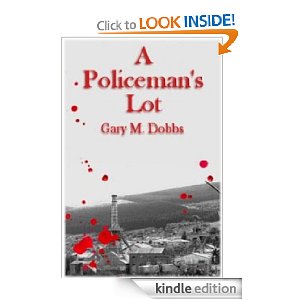
Patricia Cornwell in her mega selling book, Portrait of a Killer fixated squarely on painter, Walter Sickert and presented a wealth of evidence to suggest that he was the fiend responsible for The Whitechapel Killings, that he was indeed Jack the Ripper. Before her Stephen Knight had in his, The Final Solution provided a link to the brutal murders and the British Royal Family.  In the early 1990's we were asked to believe in the sensational find of the century when Jack the Ripper's Diary turned up in Liverpool, but after some initial excitement the book has been denounced as a fake. Over the years there have been a long list of names suggested as to being the Ripper, but in all these names never has the theory given in my novel, A Policeman's Lot been put forward. Is this because the suspect has been pulled out of left field? Hell, no - the name I have put forward in my novel has been associated with the case since the murders were first investigated.


Why then has this name never come forward before?

Well, simply because it turns all the previous theories, all the speculation and indeed the killings themselves on their head. It provides a credible explanation for what happened during that autumn of terror. Was the Ripper real or an invention of early tabloid journalism?

But it's a work of fiction, right?

Indeed it is, but I firmly believe the basic concept behind the plot - that Jack the Ripper was never discovered because....well, that maybe giving too much away. The book's out there - in PRINT and eBook. It's had a number of good reviews and I've had several readers give me the grand praise that they couldn't put it down.

It's been out digitally for the best part of a year and in print only a few weeks. It's sold a few but has not reached the audience I genuinely feel it deserved. Why? Blowed if I know - I keep pushing it in posts such as this and reviews have been turning up on Amazon. Hopefully it's a slow burner and it will explode anytime soon.

Should I give away the name of the person I have identified as the Ripper, I wonder? The book is not so much a whodunnit after all and the reader knows a few chapters in who the guilty party is, but it is only when the book has played out that all the elements come together, and a credible explanation is found. I feel that if I gave away the identity of the suggested killer here that it would push sales, but I'm not going to. Although I secretly hope some reviewer will let the cat out of the bag and start a debate.

And so all I can say is that the book is the result of several years of research into the Ripper Killings and leave you with some quotes from the various reviews. But if anyone does buy a copy then I thank you and hope you will see fit to leave a review on Amazon - even if you hate the book. Though without wanting to sound arrogant I don't think that will be the case. Click on the relevant image for either the print or eBook version.


And so those reviews:


Dobbs has done his research and packs a lot into his novel. We become immersed in a time and place on the cusp of the twentieth century. Old methods of law enforcement are yielding with the introduction of new technologies. Economic changes create new problems and social pressures. 


What an end.  The author uses Parade and Buffalo Bill to offer his own truly unique solution to the greatest unsolved serial killer mystery in history.  


The colour of the setting, the atmosphere and the characterization are all top-class. The story starts rather low-key, but once you get to the killings, everything steps up a notch and grabs you by the throat. A "historical police procedural" is the most effective way I can describe it. The storyline's multiple, concurrent strands reminded me a bit of the J. J. Marric (John Creasey) Gideon books, as did the well-observed "common people" characters. The difference here is the way they're thrown into greater relief by their contrast with the celebrated Buffalo Bill and his show people. Your choice of this background for your first Pontypridd novel was a stroke of genius. From Keith Chapman AKA western writer, Chap O'Keefe


Another review from THE MACK CAPTURES CRIME WEBSITE - Police Inspector Frank Parade prepares for duty after the last good night's rest he will enjoy for a while. For Parade, the policeman's lot is to maintain order in a six mile area with a handful of constables. But today is going to be more hectic than usual: several hundred cattle have to be moved through town on market day and Buffalo Bill's Wild West Show has just pitched camp. This is just the beginning of Parade's problems which will include deaths, robberies, fights, an escaped convict, illicit tavern activity, an overly attentive landlady, and a revelation in the Jack the Ripper case.

The hook that gets readers' attention is the connection to Jack the Ripper and a satisfying and well set hook it is. But A Policeman's Lot is, at its core, a police procedural. Pontypridd in 1904 was cosmopolitan in many respects but still retained a frontier flavor: ...the streets were often lawless -- river traders, gypsies, pickpockets, drifters, even escaped convicts had to be contended with. The story follows Inspector Frank Parade as he puts in long hours monitoring the activities in town, investigating crimes, and schooling a likable but inexperienced young constable. At the time and place the book is set, the police were still developing as a professional organization and didn't have a widespread trust among the public, telephones were not widely available making communication over distances a problem, and forensic analysis was limited. In this environment, the police had to rely on techniques still used today: collect evidence, interview everyone, observe, find patterns.

Frank Parade makes for a quite interesting character. I see him as the kind of man that made the British empire -- brave, honorable, and dedicated to service. As a soldier, he saw action in the Second Boer War then traded Army khaki for the blue of a policeman. He is unwavering in his defense of the law, sets high standards for himself and his men but is not a martinet. Watching the sober Frank deal with the freewheeling Wild West Show made for a fun study in contrasts.

About the Ripper connection I'll only say that it fits nicely into the story and has enough fact to make it a credible plot line. It also lets us see Parade performing good, solid police investigation. I checked some of the Ripper forums after I finished the book and was astonished at the passion with which the case is studied.

A Policeman's Lot is an entertaining story that brings together one of the last icons of the American West, a look at British police work while the force was still in its infancy, and one of the most widely known murder cases in history. I highly recommend it to readers who enjoy historical crime fiction and police procedurals.


Friday, 6 May 2011

A Ripping yarn - A Policeman's Lot

It's strange the way Jack the Ripper has entered popular culture -  my novel A Policeman's Lot , continues in a long tradition of fictional works based around the killings of 1888. 

Indeed the Ripper is seen in movies, comics, T-shirts and even action figures.

I kid you not - pictured is the Mcfarlane Jack The Ripper action figure. Notice the apron and the Gladstone bag - accessories every well dressed serial killer should never be without.

What is forgotten here is that the Ripper was responsible for a string of very brutal murders. Or was he? Was there even a Jack the Ripper as such? Was this lone killer an invention of the press at the time?

There have been many suspects put forward over the years - Montague John Druitt, an impoverished barrister with medical training was put forward by several respected authors, Stephen Knight in his book The Final Solution implicated the British royal family, Patricia Cornwell favoured painter Walter Sickert - the list could go on and on and would even include Lewis Carroll and Arthur Conan Doyle.


Extract from the publisher’s original reader report: A Policeman’s Lot, by Gary Dobbs. Murder mystery. 56K words. Fascinating concept, setting, and characters. Set in Wales during Buffalo Bill’s 1903/1904 tour of the United Kingdom, the story begins with Inspector Frank Parade carrying out his daily duties in the town of Pontypridd, duties complicated by the unprecedented presence of 500 members of Buffalo Bill Cody’s Wild West Show encamped outside the town, not to mention the thousands attending the show every day. A series of depraved murders quickly makes things even more complicated. Buffalo Bill stands squarely in his path when Parade tries to investigate the likely possibility that one of the hundreds of show members is involved. And soon enough Parade’s own superiors are blocking his inquires, too. Still more deaths occur as Parade sifts through the thin evidence available and finds a trail that may lead to the perpetrator of the most heinous crime of the 19th Century—London’s “Ripper” murders. Before the story is done, Parade develops a dramatic theory that may solve the Ripper mystery, as well as the murders he faces in idyllic Pontypridd. The story itself is wonderful—clever and intense.


Note from Gary M. Dobbs – The Jack the Ripper killings of Victorian London still fascinate us to this day. The killer was never captured and his/her identity remains a mystery.


Whilst researching for A Policeman’s Lot I came across a bizarre link to the final canonical killing (Note there are officially five killings attributed to the Ripper and these are known as the canonical five but there are theories that there may have actually been between 9 and 15 killings.) which placed Mary Kelly, the final victim, in South Wales in the years before moving to London. Indeed the deeper I researched the more convinced I became that it wasn’t actually Mary Kelly found dead on that bed in Spittlefields, Whitechapel but someone else. This forms the basis for A Policeman’s Lot.

Does A Policeman’s Lot finally solve the mystery? Well it’s fiction, not intended to be factual but I do believe that it throws up a further mystery – who was the woman the police identified as Mary Kelly. The body was so hideously mutilated that she was only identified by her earlobes, and then by a casual boyfriend. There were several sightings of Mary Kelly after she was supposedly dead but the police discounted these. Indeed it was the view of the chief police officer on the case that the killer escaped wearing Mary Kelly’s clothes and that this was the person people saw and mistook for Mary Kelly.

Who exactly is Police Inspector Frank Parade?

Well apart from being the lead character in a series of novels, starting later this summer with A Policeman's Lot from Solstice Publishing.

The police force in which Parade found himself serving was a very different beast to the modern force we know today - policing methods were primitive - No DNA or profiling for these guys in blue.

Candidates for the police force had to be between 18 and 27 years of age, and if married were allowed to have no more than two children when joining. The minimum height was 5ft 9ins and the officers had only one day off a fortnight. No Sunday or public holiday entitlement was given and constables and sergeants were allowed one weeks holiday per year.

A Policeman's Lot opens in 1904 and the regional forces were during this period facing a difficult transition between the methods of old and the dawn of scientific crime-fighting as exemplified by Scotland Yard's lead.

The standard uniform issued was:
1 Staff
1 Belt
1 Cape and Strap
1 Pair Leggings
2 Great Coats
2 Dress Coats
5 Pairs of trousers
2 Hats
2 Leather Neck Stocks
3 Button brushes
1 Whistle
1 Lantern
1 pair of handcuffs

Frank Parade's beat is Pontypridd -

Pontypridd during the early 1900’s could in many ways be likened to a frontier town. Because of its proximity to the industrial heart of the Rhondda and Cynon coalfields it became something of a stopping off point between Cardiff and the valleys. The population had not really settled at the start of the twentieth century and the police force, still then very much in its infancy as a professional organisation, was hard pushed to the stem the rise of lawlessness.

A Policeman's Lot brings into this mix Buffalo Bill's world famous Wild West circus as well as the re-appearance of a serial killer once known as Jack the Ripper. And by the end of the story the greatest mystery in the history of crime will be solved by a Welsh policeman and an American legend.

When constabulary's duty's to be done, the policeman's lot is not a happy one.
PIRATES OF PENZANCE 1879


Thursday, 12 August 2010

GET THOSE DAMN COWS OUT OF HERE

The book is available now in spanking new eBook format - CLICK HERE OR .HERE.  
Also go HERE for forthcoming  print-on-demand trade paperbacks.

The novel, set in the industrial South Wales of 1904 sees Buffalo Bill and his Wild West Show turn up in the town of Pontypridd. Inspector Frank Parade is a tough, no nonsense policeman who couldn't care less about, what he calls, silly cowboys and Indians  . It is not a view shared by the young Constable Davies who idolises Cody and is totally overawed in his presence. Soon the trio are investigating a string of murders that have their origins in Whitechapel, London when the killer know as Jack the Ripper prowled the streets.

Cody
Below is a short extract from chapter two of the novel:

The biting cold forced Parade to dig his hands deeper into his pockets. He listened for the whistle that would signify the train was on the last leg of its journey, cornering at Treforest before coming into Pontypridd Train Station. He peered across the Tumble, where the constable was waiting; manning the other end of the rope cordon they set up to allow the cattle safe passage across the tramway and onward to the slaughterhouse. The irony in this was not lost on the police inspector.
Two pieces of rope were tied to each side of the station entrance and then run across the Tumble, and secured to the stockyard gates. At regular intervals, they had tied colorful ribbon to the rope in order for it to be fully visible to the cattle and keep them within its field of containment. For the moment all traffic along the Tumble was stopped, including the trams, which usually passed every fifteen minutes, so they had to get this over and done with as quickly as possible.
“Shouldn‟t be too long,” Parade shouted across to the constable.
He hoped the train was on time, as it was difficult enough keeping the thoroughfare clear at the best of times, let alone on a bustling market day. A day when thousands would swarm into the town, coming from miles yonder to shop in a market that was world famous for its range of goods. The crowds coming to town for the circus would only exacerbate the situation.
Pontypridd was a vibrant cosmopolitan town and had all the problems that went with such prosperity. Alongside the great wealth there existed extreme poverty, and the streets were often lawless – river traders, gypsies, pickpockets, drifters, even escaped convicts ranging from petty thieves to crazed killers would come up the canals and make for the plentiful alehouses. There they mingled and lost themselves among the sea of faces.
The town, once a rural backwater village, was born out of the industrialization of the surrounding areas and benefited from its close proximity to the Glamorganshire Canal. This allowed access from Merthyr‟s coalfields to the docks in Cardiff and from there the world beyond. Eventually the Taff Vale Railway linked Pontypridd to the Rhondda, creating a fast and efficient artery into the coal scarred hills.
Each year would see over 57 million tons of steam coal shipped down from the Black Klondike, as the valleys were now known. The coal would then be transported down to Cardiff and Barry and sent around the world. Fires, the industrialized world over burned bright with Rhondda coal.
Suddenly the train whistle sounded and Parade gave Davies the thumbs up. At last things would get moving, and as soon as they saw the cows across the Tumble, and down to the stockyards, they would be able to get about their business. They were policemen, not cattle drovers, but Parade knew they had no choice but to secure the streets for the cattle to cross.
One time a bull went berserk and rampaged across the Tumble and down to Mill Street, where it smashed through a fence and went straight into the market, tossing vendors‟ goods every which way. Miraculously no one was hurt other than an old woman who‟d sprained an ankle in her clumsy, terrified escape from the creature‟s path. The financial damages however ran into hundreds of pounds. Damages which had to be paid for by the district, which was something Parade still heard about whenever the chief constable was in town. They waited ten more minutes before they heard the whistles of the drovers and then a rumble, like thunder, as the cattle were led across the narrow bridge that took them above the tracks.
A few more minutes went by and then the cattle were spewing out of the station and onto the Tumble. They veered to the left but were driven back into order by Davies jumping up and down, blowing his whistle, and waving his arms about above his head.
“Good man,” Parade shouted, but it was useless. There was not the remotest possibility of his voice carrying above the thunderous, earth-shaking roar of the cattle as the brainless creatures surged forward, unsure of where they were going, but going all the same. At times it looked as if they would try and break through the rope cordon, but its movement drove them back into some sort of line.
Two men came out of the station behind the cattle and walked on either side of the herd but just inside the cordons. They had wooden rattles, which they shook to move the cattle forward, and thin canes, which they used to swipe the air behind the cattle. The creatures surged with all the grace of an epileptic in full seizure.
Parade saw a cow coming toward him, a particularly large beast with red markings like blood upon its face, which served to give it a demonic look. It seemed oblivious to the rope blowing back and forth in the wind and didn‟t seem to want to stop. The policeman blew his whistle and drove the cow back into line with the others.
“Bloody dumb animals,” Parade said and looked across the Tumble when something caught his eye. There was a dog, a damned terrier, and it was running, yelping, toward the cows that were barely contained within the rope cordon.
Parade turned and was about to lunge for the dog when one of the cows struck him from behind and he was thrown face down to the ground. Although he couldn‟t be sure, he thought he heard a high-pitched laugh come from Davies as his helmet clattered across the ground.


Buy the eBook - Kindle and other formats. Can also be read on your computer screen.

The eBook represents the biggest revolution publishing has ever known.

Solstice Publishing

Saturday, 7 August 2010

A POLICEMAN'S LOT NOW AVAILABLE ON AMAZON UK KINDLE STORE

The eBook is now available on Amazon UK as well as the US site.

Read a free extract HERE


Visit the POLICEMAN'S LOT WEBSITE


Read the reviews on Good Reads


A fine turn of the century police procedural.

Inspector Frank Parade Of the Welsh town of Pontypridd heads a two man force. Law enforcement is tough enough, but now he has the Buffalo Bill Wild West Show set up outside of town, drawing thousands of people to the shows.

To top that off, murders start to happen, people with their throats cut wide open. A thief he'd arrested once had broke out of prison, killing a guard, and had sworn vengeance. A series of home thefts were ...more

Monday, 28 June 2010

Jack the Ripper mystery gains praise


There's a great review that left me beaming over at "Buddies in the Saddle."

"Parade works manfully against the odds, and in Gary Dobbs’ skillful hands, the odds keep getting longer. He’s nearly killed trying to apprehend a burglar, and his job gets turned over to his nemesis, a self-promoting fellow officer. Then a journey into London has him visiting the scenes and considering the circumstances of a series of unsolved murders sixteen years before."

From Buddies in the Saddle review of A Policeman's Lot, read the full review HERE

And if you fancy the eBook itself and a really good price go:
Amazon
Novelrank
Solstice
Bookstyle

Monday, 21 June 2010

A POLICEMAN'S LOT UPDATE


My mystery/thriller A Policeman's Lot is now available on Amazon.com for the Kindle and all other eReading devices - or, of course, you can read it direct on your PC screen or on the iPhone, iPad etc.

ORDER HERE

Think you know the Jack the Ripper story?
Think again!

Inspector Frank Parade carries out his daily duties in the Welsh industrial town of Pontypridd, duties complicated by the unprecedented presence of 500 members of Buffalo Bill Cody’s Wild West Show encamped outside the town, not to mention the thousands attending the show every day. A series of depraved murders quickly makes things even more complicated. Buffalo Bill stands squarely in his path when Parade tries to investigate the likely possibility that one of the hundreds of show members is involved. And soon enough Parade’s own superiors are blocking his inquires, too. Still more deaths occur as Parade sifts through the thin evidence available and finds a trail that may lead to the perpetrator of the most heinous crime of the 19th Century—London’s “Ripper” murders.

Shocking revelations come thick and fast.

The greatest criminal mystery in history is about to be solved by a Welsh copper and an American Legend.

Tuesday, 1 June 2010

The Welsh Ripper Killings

The process of producing an eBook is obviously quite different to that of a physical book, but the editing process for The Welsh Ripper Killings has been just as strenuous - however the book will finally see ePrint later this week. I've written about many aspects of the novel in previous posts and so I thought I'd tell you all a little about Police Inspector Frank Parade's town of Pontypridd.

Parade's beat is the Welsh town of Pontypridd - "Pontypridd was a vibrant cosmopolitan town and had all the attendant problems that went with such prosperity. Alongside the great wealth there existed extreme poverty and the streets were often lawless – river traders, gypsies, pickpockets, drifters, even escaped convicts ranging from petty thieves to crazed killers would come up the canals and make for the alehouses and taverns of which there were plenty. There they would mingle and lose themselves among the sea of faces. Though it had not always been so and the town, once a rural backwater, had been born out of the industrialisation of the surrounding areas and had benefited from its close proximity to the Glamorganshire Canal, which allowed access from Merthyr’s coalfields to the docks in Cardiff and from there the world beyond."
One area of Pontypridd featured heavily in the book is The Tumble - the modern day Tumble is pictured left and the pic above is the same area as it was in Parade's day. Note the trams that ran the length of the town during the days that Frank Parade walked the cobbled streets.
Today the Tumble is made up of a busy main road but sadly the town is no longer the thriving attraction it once was. The main building in the picture is today known as The Soul Suite but in Parade's day it was The White Hart and behind that is the River Taff and the beautiful Ponty Park.
I have tried to remain accurate with Ponty's georgraphy in A Policeman's Lot although I have taken some artistic licence in the name of telling a story. For instance in the novel the fictional alehouse, The Butcher's Arms is situated opposite the White Hart and it is here that much of the action takes place. The landlord is one Eli Jenkins, a small wiry man who is always on the lookout to make money, legal or otherwise.

"Eventually the Taff Vale railway had linked Pontypridd to the Rhondda creating a fast and efficient artery into the coal scarred hills. Each year would see over 57 million tons of steam coal shipped down from The Black Klondike, as the valleys were
now known. The coal would then be transported down to Cardiff and Barry and once again sent around the world. Fires, the industrialised world over burned bright with Rhondda coal."

The Welsh Ripper Killings is available now from Amazon, Smashwords and anywhere eBooks are sold.

Thursday, 27 May 2010

The long and winding Parade 8 - Buffalo Bill

Next month will see the digital publication of my novel, A Policeman's Lot from Solstice Publishing - I'm very excited to see this book finally in print and hope that readers everywhere will enjoy it. The book will also be available later in a print format.

The book is set in my own stamping ground of Pontypridd during the year 1904 - in those days Ponty, as we locals call it, was a busy industrial town that sat below both the coal rich Cynon and Rhondda Valleys. Writing the book involved months and months of research and not only into the Welsh past but also into a true American legend - one Buffalo Bill Cody.

Cody was born in Iowa territory in 1846 and died in 1917. At the time of his death he was probably one of the most famous men in the world - the problem was how to characterise him.

I tried all ways to bring him to life, to get his speech patterns, his mannerisms and all the little foibles. After reading the first draft I found his character alternated between being the straightforward sharp shooting frontier hero and a flash and pushy showman. I read scores of books on the subject - incidentally I would recommend The Colonel and Little Missie by Larry McMurtry as the definitive study of Cody as showman.

Still I couldn't get Cody right - I wanted the showman but I also wanted a noble man of principles. I didn't want him to be too much of one thing; I wanted a man of contradictions. And then one day I stumbled across the Clint Eastwood movie, Bronco Billy and I immediately saw my Buffalo Bill - there he was, on the screen. And so my Buffalo Bill is an amalgamation of frontier hero, sharpshooting ladies man and Clint Eastwood.

I was painfully aware that I was writing about real people in a fictional setting - these were people who actually lived, breathed and had all the human strengths and weaknesses. I wanted to reflect that in my characterisation of the great man.

The picture of Cody (left) is from 1903 - a year before the novel starts so I had some good photographic pointers as to his physical look. But the man beneath the skin was harder to get to. I hope however that I've done the man justice and that when the book hits the shelves, iPad's, Kindle's. Nooks, PC's, Macs, Sony's and so on, that maybe some readers will want to find out more about the great man.

Next, I'll tell you something about Police Inspector Frank Parade

Friday, 21 May 2010

The long and winding Parade 7 - More on old Jack

It's strange the way Jack the Ripper has entered popular culture - When my novel A Policeman's Lot is published next month, it will continue in a long tradition of fictional works based around the killings in 1888. Indeed the Ripper is seen in movies, comics, T-shirts and even action figures.

I kid you not - pictured is the Mcfarlane Jack The Ripper action figure. Notice the apron and the Gladstone bag - accessories every well dressed serial killer should never be without.

What is forgotten here is that the Ripper was responsible for a string of very brutal murders. Or was he? Was there even a Jack the Ripper as such? Was this lone killer an invention of the press at the time?

There have been many suspects put forward over the years - Montague John Druitt, an impoverished barrister with medical training was put forward by several respected authors, Stephen Knight in his book The Final Solution implicated the British royal family, Patricia Cornwell favoured painter Walter Sickert - the list could go on and on and would even include Lewis Carroll and Arthur Conan Doyle.

Next month Solstice Publishing will publish my novel, A Policeman's Lot - a story set in South Wales during the opening years of the twentieth century. And featuring both Buffalo Bill and Jack the Ripper.

It will also throw a new theory into the mix of what happened during the autumn of terror in 1888. A theory, new and unique, but based on extensive research into the murders.


Keep reading the Archive for news on A Policeman's Lot - the answers are coming soon!!!!

Sunday, 9 May 2010

A POLICEMAN'S LOT

I am pleased to announce that my crime thriller, A Policeman's Lot is looking like being available next month from Solstice Publishing. Below is a copy of the initial press release:

A POLICEMAN’S LOT

By Gary M. Dobbs

PRESS RELEASE

Extract from the publisher’s original reader report: A Policeman’s Lot, by Gary Dobbs. Murder mystery. 56K words. Fascinating concept, setting, and characters. Set in Wales during Buffalo Bill’s 1903/1904 tour of the United Kingdom, the story begins with Inspector Frank Parade carrying out his daily duties in the town of Pontypridd, duties complicated by the unprecedented presence of 500 members of Buffalo Bill Cody’s Wild West Show encamped outside the town, not to mention the thousands attending the show every day. A series of depraved murders quickly makes things even more complicated. Buffalo Bill stands squarely in his path when Parade tries to investigate the likely possibility that one of the hundreds of show members is involved. And soon enough Parade’s own superiors are blocking his inquires, too. Still more deaths occur as Parade sifts through the thin evidence available and finds a trail that may lead to the perpetrator of the most heinous crime of the 19th Century—London’s “Ripper” murders. Before the story is done, Parade develops a dramatic theory that may solve the Ripper mystery, as well as the murders he faces in idyllic Pontypridd. The story itself is wonderful—clever and intense.

Note from Gary M. Dobbs – The Jack the Ripper killings of Victorian London still fascinate us to this day. The killer was never captured and his/her identity remains a mystery.


Whilst researching for A Policeman’s Lot I came across a bizarre link to the final canonical killing (Note there are officially five killings attributed to the Ripper and these are known as the canonical five but there are theories that there may have actually been between 9 and 15 killings.) which placed Mary Kelly, the final victim, in South Wales in the years before moving to London. Indeed the deeper I researched the more convinced I became that it wasn’t actually Mary Kelly found dead on that bed in Spittlefields, Whitechapel but someone else. This forms the basis for A Policeman’s Lot.

Does A Policeman’s Lot finally solve the mystery? Well it’s fiction, not intended to be factual but I do believe that it throws up a further mystery – who was the woman the police identified as Mary Kelly. The body was so hideously mutilated that she was only identified by her earlobes, and then by a casual boyfriend. There were several sightings of Mary Kelly after she was supposedly dead but the police discounted these. Indeed it was the view of the chief police officer on the case that the killer escaped wearing Mary Kelly’s clothes and that this was the person people saw and mistook for Mary Kelly.


This summer Solstice Publishing presents, A Policeman’s Lot, in all major eBook formats. EBooks are currently revitalising the publishing industry and creating a revolution in the way we read.

A word from Kelly Abell, Editor in Chief Solstice - Solstice Publishing by its very name means “turning point” and they provide excellent quality fiction in both ebook and print book formats. Solstice is proud to add A Policeman’s Lot to its collection of quality books and adds it to Solstice Secrets, its murder/mystery book shelf. Stop by and visit to pick up your copy of Gary’s fascinating book A Policeman’s Lot and browse the other exciting titles.

Solstice Publishing – The Turning Point in Great Fiction

www.solsticepublishing.com

Gary Dobbs is available for interview


Let's be careful out there......

  The recipient of 26 Emmy awards, actually nominated 29 times and between 1981 and 1984 it had four consecutive wins of Best TV Series. It...