
Showing posts with label stephen king. Show all posts
Showing posts with label stephen king. Show all posts
Monday, 16 October 2023


Wednesday, 6 June 2018
Breakfast time just got bloody
It may seem bizarre but Funko are to release a Pennywise the Clown breakfast cereal

Stephen King recently Tweeted: Anyone want some Pennywise for breakfast? Is it your favorite? Mine, too!
Concrete details about the cereal are scarce, but a quick glimpse of the box can be seen about an hour and 20 minutes into the Netflix documentary Making Fun: The Story of Funko. The art on the box is based on the character's look from 2017’s It, mixed with a bit of that patented Funko charm.
Each box of cereal comes with a mini Funko Pop! toy. But don’t expect them to land in your local supermarket; this type of nostalgia in a bowl is going to be available only at specialty stores. According to Nerdist, you can expect Freddy Krueger, Elvira, and Beetlejuice cereals to hit first this summer (possibly in June), with the others to follow.
Only in America, folks!

Stephen King recently Tweeted: Anyone want some Pennywise for breakfast? Is it your favorite? Mine, too!
Concrete details about the cereal are scarce, but a quick glimpse of the box can be seen about an hour and 20 minutes into the Netflix documentary Making Fun: The Story of Funko. The art on the box is based on the character's look from 2017’s It, mixed with a bit of that patented Funko charm.
Each box of cereal comes with a mini Funko Pop! toy. But don’t expect them to land in your local supermarket; this type of nostalgia in a bowl is going to be available only at specialty stores. According to Nerdist, you can expect Freddy Krueger, Elvira, and Beetlejuice cereals to hit first this summer (possibly in June), with the others to follow.
Only in America, folks!
Tuesday, 22 May 2018
Stephen King still seething over The Shining

The Shining is widely considered one of the best horror films ever made, but King has never been shy about expressing his disdain for it. He’s referred to Shelley Duvall’s Wendy as “one of the most misogynistic characters ever put on film,” Kubrick as someone who “thinks too much and feels too little,” and the film itself as “a big, beautiful Cadillac with no engine inside it.”
Friday, 11 May 2018
Like father, like son

King's fiction has been frequently adapted into television and film, and projects inspired by the horror master show no signs of slowing down.
John Lithgow and Jason Clarke are slated to star in a new film adaptation of King's 1983 horror novel "Pet Sematary," which was previously made into a movie in 1989. Additionally, Universal Pictures won a bidding war last month to obtain the movie rights to "The Tommyknockers," King's 1989 science fiction novel.
Joe Hill, on the other hand, is still a reletively new name in the genre, but is gathering much criticial and fan respect for his own work. He must be applauded for casting aside the looming shadow of his world famous father and developing into a unique voice.
Wednesday, 9 May 2018
Stephen King claims all of us are a little mentally ill

In that essay, he tried to explain why people enjoy watching scary movies so much more than virtually any other type of movie out there. It seems we are all a little batty.
FIND THE FULL ESSAY HERE
Tuesday, 1 May 2018
Stephen King's The Long Walk sprints towards the big screen

The book is set in “a future dystopian America ruled by an authoritarian. The country holds an annual walking contest in which 100 teens must journey, non-stop and under strict rules, until only one of them is still standing alive to receive the prize. The story told of a 16-year-old walker named Raymond Garraty and the teens — some good, some bad, some mysterious — in his orbit.”
Think The Hunger Games but It's much more intimate and deep, it's more human, and it's not nearly as ridiculous and over-the-top.
James Vanderbilt (‘Trust,’ ‘Amazing Spider-Man’) has been set the job of adapting King’s 1979 novel ‘The Long Walk.’ for the screen.
Saturday, 7 April 2018

Thursday, 5 April 2018
Almost 200 Stephen King References hidden in this poster...how many can you find?
Are you a true Stephen King fan? Well if so take a look at this stunning poster.
Artist Jordan Monsell has packed just under TWO HUNDRED eggs into a jaw-dropping new Stephen King poster printed below.

Below is the key...click on the image to enlarge but why not see how many you can find in the image above first.

Artist Jordan Monsell has packed just under TWO HUNDRED eggs into a jaw-dropping new Stephen King poster printed below.

Below is the key...click on the image to enlarge but why not see how many you can find in the image above first.

Wednesday, 20 July 2016
End of Watch...Stephen King
This is the final book in Stephen King’s Bill Hodges trilogy – The first book Mr Mercedes (find my review HERE)
took his fans by surprise as it took the author away from his usual
horror/dark fantasy genre into the crime field. Though it shouldn’t
really have come as a surprise since King has been in and out of
differing genres for many years now, and it’s been a long time since he
could be tagged as solely a horror author. However the book was billed
as King’ FULL REVIEW HERE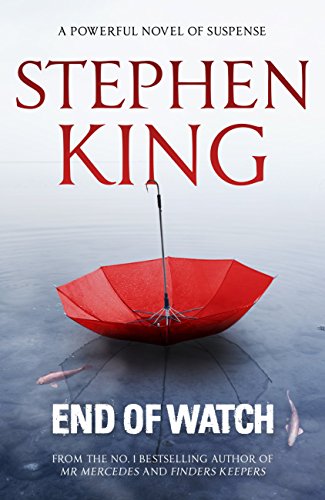
Thursday, 2 July 2015
Finders Keepers by Stephen King

Finders Keeps is structured for the first act in two time frames - 1978 and the present day. Back in the Sensational Seventies we are introduced to petty criminal Morris Bellamy who just so happens to be a huge fan of reclusive writer, John Rothstein, who seems to be based somewhat on J. D. Salinger. Bellamy is furious at Rothstein for allowing his most famous character, Jimmy Gold (a symbol for teenage America) to sell out in the last book of his acclaimed Runner trilogy.
"Shit don't mean shit."
After the publication of the third Runner novel, Rothstein gave up public life and as far as his public knew he was no longer writing. However there have long been rumours that Rothstein is in fact writing but will not publish his work, and keeps it hidden away together with strict instructions that it be destroyed when he dies.
So popular is the character of Jimmy Gold that his catchphrase, 'shit don't mean shit' sells millions of T-shirts.
“You created one of the greatest characters in American literature, then shit on him... A man who could do that doesn’t deserve to live,”
The above line comes from Morris Bellamy and is part of a blackly comical exchange between himself and the reclusive writer after he breaks into the writer's secluded home. Bellamy has two other men with him and after finding a considerable amount of cash, and better still a pile of notebooks containing everything Rothstein had written since retiring from publishing, Bellamy shoots the writer in the head. Afterwards he kills his two accomplaces and flees into the night....he's not interested in the money but looks forward to reading all the unpublished fiction, who knows, he figures, there may even be a new Runner novel amongst all the moleskin notebooks he's stolen.

Morris buries the notebooks and cash in an old suitcase while he waits for the heat to die down, but unfortunately one drunken night leads to him being arrested for assualt and rape and being sentanced to life in prison. Thirty years later the suitcase is discovered by young Peter Saubers who uses the money to help his family - his dad was injured during the mercedes massacre which was the plotline of the previous book Mr Mercedes.
Of course these two story threads come together when Morris Bellamy is released from prison, still batshit crazy and looking forward to reading the stolen Rothstein notebooks. Cue the entrance of Bill Hodges, the wonderfully drawn, Holly and Jerome. The team who solved the Mr Mercedes case are back!
Finders Keeps, at 400 pages, is short by King's doorstopper standards and all the better for it - expertly plotted the book hurtles towards another thrilling conclusion. I especially liked the way we see the Mr Mercedes massacre again,- this time from a different character's POV and after several years of avoiding Mr King I think I am firmly back in the King is the King camp. The third book (rumoured to be called The Suicide Prince or End of Watch) will obviously feature the return of Brady Hartfield (the killer from Mr Mercedes) who appears several times in this book and seems to have developed some sort of supernatural power.

Both Mr Mercedes and Finders Keepers have been straightforward crime thrillers and I do hope King doesn't go down the supernatural route for his next novel in the series. Whatever happens....I can't wait for the third novel and pray King doesn't go down the Rothstein route and lock the manuscript away unpublished.....because shit don't mean shit until I get the next book.
Monday, 22 June 2015
Mr Mercedes by Stephen King

I first picked up this book in hardcover (as I do with most of Stephen King's books), but for some reason didn't get around to reading it until the eBook became available. I do love my Kindle and find it the only way to read fiction, but that's besides the point of this review. I still buy the physical books from author's I especially like and over recent years my shelves have become stocked with copies that will remain in mint condition as electronic ink becomes my medium of choice.
At just over 400 pages, it is a slim book by King's standards and all the better for it - the story is tighter, moves at a steady pace and held my attention for the few days it took me to read it. In fact I've not enjoyed a King novel so much as this one in a long, long time, and for once the ending (never King's strongest point) is absolutely rivetting. This then, the start of the Bill Hodges trilogy (the second, Finders Keepers has just come out in hardcover) is a bloody good, no nonsense thriller that sees King at the top of his form.
Though King has always been a fucking fantastic writer, he has lost me a few times over the years (I could never dig the Dark Tower series for instance). He even on times bored me with the padding he tended to throw into each book. It got so bad that I morphed from one of his constant readers into an occassional reader, but ever since 11,22, 63 (2011) he's been like an unstoppable rollercoaster delivering one great book after another, with the possible exception of that millionth Dark Tower bookie, of course. One of the most accessible of his recent books, Joyland (2013) was almost a novella by King's standard and saw King swapping his crucifix for as snub nosed .38 as he crossed into the crime/thrlller genre. It's a genre he fits well and with Mr Mercedes, King proves himself as much a master of it as he was with horror.

Under the Blue Umbrella, is a social network where Hodges gets to chat with the maniac and slowly events turn, and before the reader know it they are fully invested in this excellent story. Of course King's grasp of character is awe aspiring and the reader really becomes involved in the characters that populate the book, the characters become so real that we almost feel as if we've know them our entire lives - Holly for instance is a wonderful creation, as is Jerome, and I must own up to shedding a tear when a major character is snuffed out around the half way point - there's not many writers who can turn a cynical forty something old school male into a snivelling girl but King is one such writer.
King doesn't go down the mystery thriller road and we, the readers, are introduced to the maniac, Mr Mercedes, or Brady very early in the story, and we spend much of the book walking around his inner life. And boy is his madness built up in a realitic and chilling way, nuerosis is piled on top of nuerosis as we begin to, if not emphasise then at least understand what could turn Brady into such a total bastard. Yep, this world we live in is a fucked up place.
An excellent crime thriller which Stephen King calls his first hard-boiled detective story, but I don't think it's especially hard-boiled since I usually associate the phrase hard-boiled with the paired back style of Chandler and authors of that ilk. King is much too verbose to be truly hard-boiled but all the same the story is lean by King's usual standards.
Highly recommended.
Monday, 27 January 2014
The Long Walk - Richard Bachman AKA Stephen King

And at the time of publication it was a secret that King was Bachman - In fact King went to great pains to hide the fact that he was the author and a false bio was invented for Bachman. King's agent, Kirby
 |
| Bachman author photograph - actually Richard Manuel, |
I'd read a lot about The Long Walk but had never read it until now. King claims it was the first novel he ever wrote and there are many people who claim that it is actually King's best ever work, and whilst I'm not so sure about this, it is a damn fine book. I was led to believe that the book was set in the near future but that is not the case, and it is actually set in an alternative 1970's America - there are several clues that point to this being an alternative version of the USA, most obvious is the fact that in this America the East Coast was air bombed by the Germans during the Second World War. In fact even the blurb on the original paperback cover claimed the story took place in a future America, but the book is set in present day (the 1970's) only with a twist.
The plot is quite simple - in a dystopian society there is very little hope if you are born on the wrong side of the tracks, very little chance of you improving your lot. The only way seems to be The Long Walk, an annual event in which 100 people line up for a walk - each walker must maintain a minimum speed of four miles per hour. If a walker drops below that speed he gets a warning and another follows after thirty seconds. Three warnings and the walker is shot, usually through the head, - this is called buying a ticket. The walk goes on and on and on until only one walker is left standing. The Walk begins at the Main/Canada border and continues across America's East Coast, mile after blistering mile, until only one person is left alive. The prize for the winner is anything they desire for the rest of their lives.

A slim premise and I can't think of many writers who could spin off an entire novel from such a premise but King does it and he does it incredibly well - as soon as I started reading I became so involved in the story that I didn't want to to close the covers for it's three hundred odd pages. I just had to get to the end and find out what happens.
It's a brutal story - imagine walking and having to keep on walking while your feet blister and then bleed. You are unable to stop because behind you there are several nameless soldiers riding on a slow moving vehicle ready to give you your ticket as soon as you falter.
The hero is a character called Ray Garraty and during the walk he strikes up friendships with several other walkers, only to lose his new friends one by one as they give in to blisters, torn muscles or insanity. Some walkers become so tired, so exhausted that they even welcome the bullet that will put them out of their misery.
The narrative zings along and although it does start to drag somewhat as it nears the climax it never fails to hold the reader's attention. It's no wonder that Stephen King is such a big name when he writes as brilliantly as he does here.
An absolutely brilliant book. If you've not read this book then you really need to take the Long Walk.
Excellent.
Sunday, 29 September 2013
Stephen King is in grumpy old man mode and we love him!!!
Stephen King in an interview with The Guardian newspaper took a shot at both the Twilight series and mega a 2008 review of Suzanne Collins' first book for Entertainment Weekly, King confessed that he "couldn't stop reading" the novel. And yet King had this to say in the Guardian interview -
 selling Fifty Shades of Grey and its sequels. Whilst this was not surprising since King's dislike of the Twilight series is well known it was a surprise for him to also have a go at The Hunger Games.
"I read Twilight and didn't feel any urge to go on with her. I read The Hunger Games and didn't feel an urge to go on. It's not unlike The Running Man, which is about a game where people are actually killed and people are watching: a satire on reality TV. I read Fifty Shades Of Grey and felt no urge to go on. They call it mommy porn, but it's not really mommy porn. It is highly charged, sexually driven fiction for women who are, say, between 18 and 25. But a golden age of horror? I wouldn't say it is. I can't think of any books right now that would be comparable to The Exorcist." Stephen King
The interview, which can be read HERE, is an interesting in-depth look King and his work.

"I read Twilight and didn't feel any urge to go on with her. I read The Hunger Games and didn't feel an urge to go on. It's not unlike The Running Man, which is about a game where people are actually killed and people are watching: a satire on reality TV. I read Fifty Shades Of Grey and felt no urge to go on. They call it mommy porn, but it's not really mommy porn. It is highly charged, sexually driven fiction for women who are, say, between 18 and 25. But a golden age of horror? I wouldn't say it is. I can't think of any books right now that would be comparable to The Exorcist." Stephen King
The interview, which can be read HERE, is an interesting in-depth look King and his work.
Thursday, 20 September 2012
New Stephen King from the Hard Cases

FROM HARD CASE CRIME
JOYLAND to be published in June 2013
Called "the best new American publisher to appear in the last decade" by Neal Pollack in The Stranger, Hard Case Crime revives the storytelling and visual style of the pulp paperbacks of the 1940s, 50s, and 60s. The line features an exciting mix of lost pulp masterpieces from some of the most acclaimed crime writers of all time and gripping new novels from the next generation of great hardboiled authors, all with new painted covers in the grand pulp style. Authors range from modern-day bestsellers such as Pete Hamill, Donald E. Westlake, Lawrence Block and Ed McBain to Golden Age stars like Mickey Spillane (creator of "Mike Hammer"), Erle Stanley Gardner (creator of "Perry Mason"), Wade Miller (author of Touch of Evil), and Cornell Woolrich (author of Rear Window).
Stephen King commented, "I love crime, I love mysteries, and I love ghosts. That combo made Hard Case Crime the perfect venue for this book, which is one of my favorites. I also loved the paperbacks I grew up with as a kid, and for that reason, we’re going to hold off on e-publishing this one for the time being. Joyland will be coming out in paperback, and folks who want to read it will have to buy the actual book."
King’s previous Hard Case Crime novel, The Colorado Kid, became a national bestseller and inspired the television series "Haven," now going into its third season on SyFy.
"Joyland is a breathtaking, beautiful, heartbreaking book," said Charles Ardai, Edgar- and Shamus Award-winning editor of Hard Case Crime. "It’s a whodunit, it’s a carny novel, it’s a story about growing up and growing old, and about those who don’t get to do either because death comes for them before their time. Even the most hardboiled readers will find themselves moved. When I finished it, I sent a note saying, ‘Goddamn it, Steve, you made me cry.’ "
Nick Landau, Titan Publisher, added: "Stephen King is one of the fiction greats, and I am tremendously proud and excited to be publishing a brand-new book of his under the Hard Case Crime imprint."
JOYLAND will feature new painted cover art by the legendary Robert McGinnis, the artist behind the posters for the original Sean Connery James Bond movies and "Breakfast At Tiffany’s," and by Glen Orbik, the painter of more than a dozen of Hard Case Crime’s most popular covers, including the cover for The Colorado Kid.
Since its debut in 2004, Hard Case Crime has been the subject of enthusiastic coverage by a wide range of publications including The New York Times, USA Today, Time, Playboy, U.S. News & World Report, BusinessWeek, The Los Angeles Times, The Chicago Sun-Times, The Houston Chronicle, New York magazine, the New York Post and Daily News, Salon, Reader’s Digest, Parade and USA Weekend, as well as numerous other magazines, newspapers, and online media outlets. The Chicago Sun-Times wrote, "Hard Case Crime is doing a wonderful job publishing both classic and contemporary ‘pulp’ novels in a crisp new format with beautiful, period-style covers. These modern ‘penny dreadfuls’ are worth every dime." Playboy praised Hard Case Crime’s "lost masterpieces," writing "They put to shame the work of modern mystery writers whose plots rely on cell phones and terrorists." And the Philadelphia City Paper wrote, "Tired of overblown, doorstop-sized thrillers...? You’ve come to the right place. Hard Case novels are as spare and as honest as a sock in the jaw."
Other recent Hard Case Crime titles include THE COCKTAIL WAITRESS, a never-before-published novel by James M. Cain, author of THE POSTMAN ALWAYS RINGS TWICE, MILDRED PIERCE, and DOUBLE INDEMNITY, and an epic first novel called THE TWENTY-YEAR DEATH by Ariel S. Winter that won advance raves from authors such as Peter Straub, James Frey, Alice Sebold, John Banville, David Morrell and Stephen King.
About Hard Case Crime
Founded in 2004 by award-winning novelists Charles Ardai and Max Phillips, Hard Case Crime has been nominated for or won numerous honors since its inception including the Edgar, the Shamus, the Anthony, the Barry, and the Spinetingler Award. The series’ books have been adapted for television and film, with two features currently in development at Universal Pictures and the TV series “Haven” going into its third season this week on SyFy. Hard Case Crime is published through a collaboration between Winterfall LLC and Titan Publishing Group.
About Titan Publishing Group
Titan Publishing Group is an independently owned publishing company, established in 1981, comprising three divisions: Titan Books, Titan Magazines/Comics and Titan Merchandise. Titan Books, recently nominated as Independent Publisher of the Year 2011, has a rapidly growing fiction list encompassing original fiction and reissues, primarily in the areas of science fiction, fantasy, horror, steampunk and crime. Recent crime and thriller acquisitions include Mickey Spillane and Max Allan Collins’ all-new Mike Hammer novels, the Matt Helm series by Donald Hamilton and the entire backlist of the Queen of Spy Writers, Helen MacInnes. Titan Books also has an extensive line of media and pop culture-related non-fiction, graphic novels, art and music books. The company is based at offices in London, but operates worldwide, with sales and distribution in the US and Canada being handled by Random House. www.titanbooks.com
Saturday, 8 September 2012
Christine

My memory of the movie was that I don't think I liked it that much, maybe I thought it was too slow and maybe I was disappointed with the lack of the gruesome stuff - hey, remember that yucky stuff matters when the viewer at a certain age. And so when I saw the film on a budget DVD, I thought I'd like to see it again. After all, I'd loved the original novel and these days, as an older film viewer, I find that story, acting and all those other little things matter to me far more than a few splatters of gore.
And you know what - I enjoyed the movie a heck of a lot more this time around.

And what a performance from Keith Gordon - Ok maybe the transformation from hopeless nerd to super cat happens a little too quickly, but when he turns nasty, being all of nine stone soaking wet, he really pulls it off and not for a moment do we doubt him. It's an incredible performance and although the supporting cast are decent, he steals the entire show. Some of the more touching character scenes come when Arnie is alone with Christine and, although touching, these are incredibly creepy.

Christine then is a pretty good horror thriller - it riffs on the teenage love affair with cars and for anyone who has ever projected a personality onto a car, Christine is one sexy but scary bitch. Stephen King's nostalgia for the 50's which often shows up in his books, is running through the DNA of this movie, and it's all the better for it. The way Christine's period radio always seems to tune to a rock and roll station really works in the framework of this picture and enhances the feel of the piece - as Christine knows, the devil's got all the best tunes.
If you've never seen Christine then take her for a spin, and if you've seen it before then it's maybe time for another ride.
Thursday, 28 June 2012
Carrie first pics

“… We’re kind of going off the book. It’s darker and much more psychological. More ‘Black Swan.’ You’re really looking into her mind and it really looks into the relationship of Margaret and Carrie. It’s set in modern time, so it’s a lot different… It’s something that’s very different from me. It’s an out of body thing. I’m becoming a totally different person for it. I’m letting go of all of my self-esteem issues and just kind of going into it. You have to.” Director Kimberly Peirce
Friday, 22 June 2012
Fear this - interview with John Gilbert

Enjoy
Note for this interview I adopted my Vincent Stark persona.
Fear Magazine was spawned in 1988 and quickly became a favorite among fans of horror, fantasy and Sci-Fi – right from the start Fear was different from most other genre titles. It was more cerebral than most and was rare in that it had a fiction section which provided opportunities for new writers as well as featuring work from established voices. I was a huge fan of the mag, never missed an issue and this week I got to sit down with editor, John Gilbert to chat about Fear Magazine, as well as John’s other genre related activities.
Scary Motherfucker presents Vincent Stark in conversation with John Gilbert.
VS: I remember Fear Magazine hitting the shelves and it had the look of a few of the computer magazines of the time, most noticeably Crash with which it shared a cover artist. I believe you were working in the computer press prior to launching Fear?
JG: Yes, I was Deputy Editor at Sinclair User and had also worked for Computer and Video Games. In fact it was a piece for them on the horror genre that got me thinking about the possibilities of a horror/fantasy magazine. There were already publications such as Starburst out there and I figured that a new magazine would need to stand apart from the others, to draw in fans because it was written by fans. It was blessed in that it had the financial muscle of a successful publisher in Newsfield which also gave it a top knotch design team and a brilliant illustrator.
VS: Fear was more intellectual than most genre magazines, and I was delighted you covered horror literature in as much depth as you did movies, a rarity for the period. The magazine managed to lure some big names to its pages. Were the genre luminaries always receptive to Fear?
JG: We were very lucky to attract top names like Ramsey Campbell, Stephen King, James Herbert and Clive Barker. We were serious about presenting their work in a way that the mainstream newspapers and magazines were not. And I have to say – we did it in style. I was amazed at some of the layouts the design team put together.

VS: It must have been great fun to hang around with these genre luminaries. Any anecdotes you’d like to share?
JG: I always felt grateful when writers invited me into their homes or said kind things about the magazine. Clive Barker even phoned to congratulate us when the magazine launched. He was so busy and certainly didn’t have to do that but he did anyway. And I remember getting very drunk on Brandy and Coke whilst talking to Brian Lumley at his house in Cornwall. Incredibly that turned out to be one of the best pieces I ever did.
VS: Perks of the job.
JG: One of the weirdest interviews I did was with Shaun Hutson – his then current novel featured a scene set in the underwear section of a well known department store, and Shaun took me there and tried to convince the manager to let us do a photo-shoot amongst all these knickers. We were turned down and so we shot pics of Shaun in front of the store. When the interview was published I described Shaun as the most disgusting horror writer because of an incident that happened in one of his books – we’re talking a zombie blow job here with loads of maggots. He returned the compliment by signing my copy of the book, “to the most disgusting editor.” It’s all good memories – I also recall a magical tour of Liverpool I took with Ramsey Campbell as my guide and a similar trip around Newcastle with Stephen Laws. Stephen and I followed this up with an evening watching Hammer movies which we both love.
VS: What about the celluloid side of the genre?
JG: I did a lot of set visits to Pinewood. I particularly enjoyed a visit to the set of Hellraiser II and meeting Ashley Lawrance and Kenneth Cranham. There was also one time when I got too close to the Batman set and was chased off by ferocious guard dogs.
 VS: You co-wrote the Nightbreed Making of book with
Mark Salisbury and you’ve mentioned Clive Barker. He of course burst
onto the scene with the excellent Books of Blood series. He was the
writer Stephen King called,
the future of horror. Are you surprised at the way he’s gone with his
writing? Seemingly away from out and out horror and more into dark
fantasy.
VS: You co-wrote the Nightbreed Making of book with
Mark Salisbury and you’ve mentioned Clive Barker. He of course burst
onto the scene with the excellent Books of Blood series. He was the
writer Stephen King called,
the future of horror. Are you surprised at the way he’s gone with his
writing? Seemingly away from out and out horror and more into dark
fantasy.JG: I’ve massive respect for Clive who has continued his creative output despite chronic illness. Many careers were launched on the tide of his success and he is the consummate all round artist, pushing in new directions. I don’t think he’s abandoned horror and I suspect he has a few more surprises up his sleeve for us. I hope that we can all broaden our horizons and follow Clive’s lead and I certainly hope we can continue to be proud of the horror genre and I will never let it limit what I write be it fiction or journalism.
VS: Speaking of fiction, tell us about your forthcoming book.
JG: I’ve a novel that I can’t reveal too much about at the moment. I’ve had the title, The Knowledge which refers to the rigorous test London Cabbies have to go through before they can get their licenses. They must learn all the back routes and the quickest way from one place to another. They are the custodians of the secrets of London, where the skeletons are buried and all of the strange things that go on. That said the novel is not about cabbies and it’s got something for everyone – action, weird sex, violence, occult powers and a mystery at its heart. I’ve also got other novel projects and short stories in the planning stages.
VS: Keep us informed on these works.
JG: Of course.
VS: Fear’s fiction section was so popular that it spawned a spin off fiction magazine, Frighteners. However one issue featured a controversial story, Eric the Pie by Graham Masterton and the biggest retail chain, W H Smith pulled the title from its shelves. Did this hasten the demise of the title?

JG: No not really. I think it made us more determined to be cutting edge. We did Satanic and Vampire issues that shook up people and led to me going face to face with a vicar on Radio Four’s Halloween chat program. At the same time it also drove us to find ways to go right to the line without stepping over it.
VS: Why did Fear Fold?
JG: Newsfield, our publishing company, went into administration. Let’s just say that for reasons that had nothing to do with Fear, which was still in profit, it all came to an end. I was given a decent budget to produce the magazine and I used this to pay the freelancers – anything left I took as my salary. Needless to say the more I spent the less I earned but I was usually able to strike up a nice balance.
VS: I concur - had you not then the magazine would not be as dearly missed as it is.
VS: Fear’s demise seemed to coincide with a dip in the horror genre itself. It seemed that the genre went from being massively popular to a niche market almost overnight.
JG: I think that fans will only take so much repetition and no matter how good a writer is if they’re working with stereotype plots and characters then it’s a turn off. There is only so much faith you can put in a genre that keeps repeating itself. That said it seems as if someone had applied the defibrillator and there’s a renaissance in the air. Bring on the new monsters because I feel the genre is rising again. I feel it in these old bones.
VS: So do you still read widely in the genre?
JG: Oh yes, I’m still a massive fan. At the top of my reading pile sits Andrew Neville who writes the kind of horror I like and his style is so polished. Then there are old friends like Mark Morris, Nick Vince and Tom Fletcher. I’m also eager for the long awaited new novel from James Herbert (Ash). But there are many more writers that I need to get to know like Gary McMahon whose work I will explore over the summer months.
VS: What about genre film and TV?
 JG:
Stephen Volk is fantastic. I loved Awakening and I still have Afterlife
on DVD. Then there’s Guillermo del Toro who is awesome, even in Spanish
and finally Mark Gatiss whose babies I would gladly have. I’m also a
sucker for Christmas Ghost Stories.
JG:
Stephen Volk is fantastic. I loved Awakening and I still have Afterlife
on DVD. Then there’s Guillermo del Toro who is awesome, even in Spanish
and finally Mark Gatiss whose babies I would gladly have. I’m also a
sucker for Christmas Ghost Stories.VS: Back to Fear – are you surprised that the magazine is so sadly missed?
 JG: Stunned. I knew that copies were being sold on
eBay but I never expected the response I got when I started a Facebook
page (befriend John HERE).
I’ve had many offers to restart the magazine, but the deals have always
fallen through. Now though I have enough finances to try again but it
is difficult to find a major distributor. The market is apparantly
flooded with enough genre magazine. And so in the meantime I have taken the advice of some collegues – I work at Pearson which owns Penguin – and am about to unleash some fiction onto the market.
JG: Stunned. I knew that copies were being sold on
eBay but I never expected the response I got when I started a Facebook
page (befriend John HERE).
I’ve had many offers to restart the magazine, but the deals have always
fallen through. Now though I have enough finances to try again but it
is difficult to find a major distributor. The market is apparantly
flooded with enough genre magazine. And so in the meantime I have taken the advice of some collegues – I work at Pearson which owns Penguin – and am about to unleash some fiction onto the market.Hungry Faces - Publication date by Opium Press is now scheduled for 27th September in eBook format and paperback.
VS: I’m glad to see the book will be available as a eBook – I seem to read everything on my Kindle these days. Do you think the ePublishing boom will be good for genre fiction?
JG: Indeed – the ease in which anyone can produce an eBook means that innovation will out and that good genre fiction can once again prosper. Fans will get what they want and new writers will be able to develop their talents in a public arena. Of course there will be an awful lot of dross out there but that’s where blogs such as this, and magazines like Fear cab provide a service.
VS: So come on tell us about the possible Fear relaunch. There are many of us eagerly waiting to buy the magazine again.
JG: We have a new design team who have already recreated the Fear format but with 21st century tweaks. We will be moving with the times but also serving past subscribers by retaining all they loved about Fear MK1. We will also carry on publishing fiction within the magazine but have yet to take on a fiction editor. The bad news is though that most of the major distributors have declines to stock us, but that will not put us off and we are currently looking for alternative distribution. Once we can prove we have a good reader base then we can go back to distributors.

VS:Which is why Scary Motherfucker has started a Facebook page to bring back Fear Magazine - join the campaign folks.
John’s website is HERE
Facebook bring back Fear campaign HERE
Wednesday, 30 May 2012
Stephen King: Hardboiled scribe

“I love crime, I love mysteries, and I love ghosts. That combo made Hard Case Crime the perfect venue for this book, which is one of my favorites. I also loved the paperbacks I grew up with as a kid, and for that reason, we’re going to hold off on e-publishing this one for the time being. Joyland will be coming out in paperback, and folks who want to read it will have to buy the actual book.” Stephen King
“Joyland is a breathtaking, beautiful, heartbreaking book,” said Charles Ardai, Edgar- and Shamus Award-winning editor of Hard Case Crime. “It’s a whodunit, it’s a carny novel, it’s a story about growing up and growing old, and about those who don’t get to do either because death comes for them before their time. Even the most hardboiled readers will find themselves moved. When I finished it, I sent a note saying, ‘Goddamn it, Steve, you made me cry.’ ”
Robert McGinnis, the man responsible for the early Sean Connery James Bond posters, will provide the cover art which is another reason to get excited about this book.
Since its debut in 2004, Hard Case Crime has been the subject of enthusiastic coverage by a wide range of publications including The New York Times, USA Today, Time, Playboy, U.S. News & World Report, BusinessWeek, The Los Angeles Times, The Chicago Sun-Times, The Houston Chronicle, New York magazine,the New York Post and Daily News, Salon, Reader’s Digest, Parade and USA Weekend,as well as numerous other magazines, newspapers, and online media outlets. The Chicago Sun-Times wrote, “Hard Case Crime is doing a wonderful job publishing both classic and contemporary ‘pulp’ novels in a crisp new format with beautiful, period-style covers. These modern ‘penny dreadfuls’ are worth every dime.” Playboy praised Hard Case Crime’s “lost masterpieces,” writing “They put to shame the work of modern mystery writers whose plots rely on cell phones and terrorists.” And the Philadelphia City Paper wrote, “Tired of overblown, doorstop-sized thrillers…? You’ve come to the right place. Hard Case novels are as spare and as honest as a sock in the jaw.”
Other upcoming Hard Case Crime titles include The Cocktail Waitress, a never-before-published novel by James M. Cain, author of The Postman Always Rings Twice, Mildred Pierce, and Double Indemnity, and an epic first novel called The Twenty-Year Death by Ariel S. Winter that has won advance raves from authors such as Peter Straub, James Frey, Alice Sebold, John Banville, David Morrell and Stephen King.
For information about these and other forthcoming titles, visit www.HardCaseCrime.com.
Tuesday, 1 May 2012
Stephen King puts his money where his mouth is

Bestselling novelist Stephen King, who gives away $4m (£2.5m) a year in charitable donations, has issued an expletive-filled call to America to increase the rate of tax paid by the country's rich.
King himself currently pays taxes of around 28% on his income, and at a recent rally in Florida wondered publicly why he was not paying a higher rate of 50%. You're unhappy about it? "Cut a check and shut up," was the response from his listeners, the author writes in a piece for The Daily Beast entitled Tax Me, for F@%&'s Sake! "If you want to pay more, pay more, they said. Tired of hearing about it, they said. Tough shit for you guys, because I'm not tired of talking about it. I've known rich people, and why not, since I'm one of them? The majority would rather douse their dicks with lighter fluid, strike a match, and dance around singing 'Disco Inferno' than pay one more cent in taxes to Uncle Sugar."
Some of America's rich do donate part of their tax savings, King acknowledged; he himself gives $4m "to libraries, local fire departments that need updated lifesaving equipment (Jaws of Life tools are always a popular request), schools, and a scattering of organisations that underwrite the arts". But, calling himself only "'baby rich' compared with some of these guys, who float serenely over the lives of the struggling middle class like blimps made of thousand-dollar bills", the novelist says this "doesn't go far enough [because] charity from the rich can't fix global warming or lower the price of gasoline by one single red penny".
Wednesday, 7 December 2011
Lunch at the Gotham Cafe Stephen King

This particular short sharp shock tells of a man called Steve Davies who returns home from work one day to discover that his wife has left him, and the story presents us with a man who has no idea why his marriage has broken down. He tried to contact his wife who is at her mothers, but is told that she doesn’t want to speak to him. Steve quite smoking – hardly the best time to do this, he tells himself, but he does it anyway. Is the smoking the reason his marriage collapsed? Eventually Steve is contacted by his lawyer who has made plans for the two parties, plus lawyers to meet for lunch at The Gotham Cafe in order to start putting things in order. However Steve’s lawyer is unable to attend due to a family crisis but Steve’s decides to go ahead with the meeting beause…well, because he wants to see his wife whom he hasn’t so much as spoken to since she walked out on him.
Of course bedlam follows, but not in the way the reader expects and King introduces a new element into the story in the shape of a manic maitre d’, named Guy who for some reason seems to have lost his marbles and is intent on murder - think, Basil Fawlty on steroids. King gleefully dispatches the lawyer first (something that had this reader applauding.) before setting Guy on Steve and his estranged wife, Diane. A great action sequence that is part slasher movie, part black comedy follows, but at the end of the story just when you think Steve will win his woman back, things take an even darker turn.
The story I guess is somewhere around six thousand words which means it can be read in less than half hour, and it really is a great piece. There just enough characterization to enable the reader to empathize with Steve and by telling the story through his eyes, and keeping Diane from us until the cafe scene she becomes the ideal woman to us. This makes the story all the more powerful and by the end the reader has experienced an emotional roller coaster ride as powerful as anything a full length novel could offer.
This is quality King.
Subscribe to:
Posts (Atom)
Let's be careful out there......
The recipient of 26 Emmy awards, actually nominated 29 times and between 1981 and 1984 it had four consecutive wins of Best TV Series. It...

-
 Fame is indeed a fickle thing, and I've been reminded of that by the death of Gerald Harper on the 2nd July this year...I didn't e...
 -
 The western can be many things - any kind of story can be told within a western setting and the genre can be relevant to this tarnished mode...
 -
 The Tainted Archive is a place of highbrow reading, and so when paparazzi photographers recently caught a snap of Catwoman herself, Ann...